Quick Answer
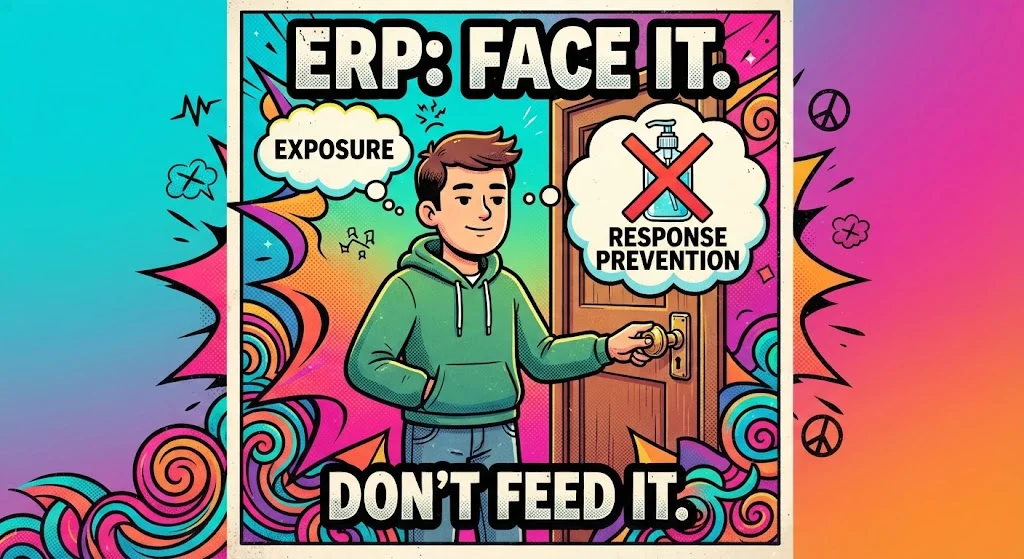
Exposure and Response Prevention (ERP) is a type of cognitive behavioral therapy where you face your fears (exposure) without doing the things you normally do to feel better (response prevention). Top ways to explain it: “Facing your fears without the safety net,” “Teaching your brain that anxiety lies,” “The gold standard for OCD treatment,” “Riding the wave instead of running from it,” and “Proving your intrusive thoughts wrong by not reacting.”
Ever tried explaining what exposure and response prevention is at a dinner party and watched everyone’s eyes glaze over? Or maybe you’ve seen it mentioned online and thought “wait, so they want me to touch the dirty thing and NOT wash my hands? That sounds like a nightmare.” Welcome to the club.
Whether you’re texting a friend about your therapy journey, replying to a curious comment on your mental health post, or just trying to sound like you know what you’re talking about in a group chat, having the right words matters. ERP is the most effective treatment for OCD and anxiety disorders, with research showing that 50% to 60% of people who complete treatment experience significant improvement. But explaining it without sounding like a psychology textbook? That’s the real challenge.
The way you talk about ERP shapes how people understand it. The right reply can make someone curious instead of scared. So here are 150+ ways to explain, defend, joke about, and celebrate exposure and response prevention, sorted by vibe.
Funny Responses
“It’s like ghosting your anxiety instead of texting it back.”
Example: Perfect for when someone asks why you’re not doing your usual checking routine before bed.
Meaning: Your anxiety wants attention and reassurance, but ERP teaches you to stop replying to every panicked thought.
“My therapist said touch the thing. So I touched the thing. And nothing bad happened. Rude.”
Example: Used when describing exposure exercises to friends who think therapy is all sitting and talking.
Meaning: The exposure part often produces anticlimactic results that challenge your brain’s doomsday predictions.
“ERP: where ‘just don’t do it’ is actually legitimate professional advice.”
Example: Great reply when someone says “why don’t you just stop washing your hands so much?”
Meaning: Response prevention means deliberately skipping the compulsion, and yes, it’s harder than it sounds.
“They call it exposure therapy because you’re exposed to how dramatic your brain is.”
Example: When sharing a funny therapy story with your group chat.
Meaning: The thoughts you’re confronting often feel absurd once you stop avoiding them.
“So I’m supposed to sit with my anxiety? Like we’re coworkers now?”
Example: Describing the concept to someone who thinks anxiety is something you should always fight.
Meaning: ERP asks you to coexist with discomfort rather than escape it immediately.
“My therapist told me to touch the doorknob and not die. Great news: I didn’t die.”
Example: A lighthearted way to share an exposure win with friends.
Meaning: Exposure teaches your nervous system that the feared outcome rarely happens.
“ERP is just proving your anxiety wrong, one uncomfortable moment at a time.”
Example: When someone asks why you’re voluntarily doing something scary.
Meaning: Each exposure session provides evidence that contradicts your fear-based predictions.
“They said face your fears. I said I’d rather face my phone. They said no.”
Example: Relatable content for anyone who avoids their fear hierarchy.
Meaning: ERP requires actual confrontation, not just intellectual understanding.
“Exposure therapy: the only time ‘don’t do anything’ counts as doing something.”
Example: When explaining response prevention to someone confused by the concept.
Meaning: Resisting compulsions is active, purposeful work even though it looks like doing nothing.
“My brain said ‘what if’ and ERP said ‘what if you calm down.’”
Example: Sharing a mantra that helps during tough exposure moments.
Meaning: The therapy reframes catastrophic thinking into manageable probability.
“Turns out anxiety isn’t a personality trait. It’s just a really persistent spam caller.”
Example: When someone asks how therapy is going.
Meaning: ERP helps you recognize anxiety as a temporary visitor, not a permanent identity.
“They asked me to rate my fear 1 to 10. I said 47. They said no, we mean out of 10.”
Example: A relatable joke about the subjective units of distress scale used in ERP.
Meaning: Anxiety makes everything feel more extreme until you practice rating it accurately.
Brutal Responses
“Exposure and response prevention is the treatment your anxiety doesn’t want you to know about.”
Example: Used when someone insists their anxiety is untreatable.
Meaning: ERP directly challenges the avoidance that keeps anxiety disorders alive.
“You can keep doing compulsions, or you can get better. Pick one.”
Example: A direct response to someone making excuses for not trying ERP.
Meaning: Compulsions provide temporary relief but maintain the disorder long-term.
“ERP works. Your excuses don’t.”
Example: For when someone says they’re “too anxious” for exposure therapy.
Meaning: The therapy is designed for anxious people, and research shows it’s effective even when it feels hard.
“Avoidance is just anxiety’s way of keeping you stuck. ERP is the exit.”
Example: When discussing why someone keeps declining social situations.
Meaning: Every avoided situation reinforces the fear, while exposure weakens it.
“You’re not special. Your OCD isn’t special. ERP works on all of it.”
Example: Responding to someone claiming their case is too unique for standard treatment.
Meaning: ERP has been validated across diverse OCD presentations and severities.
“The only thing exposure therapy exposes is how much time you’ve wasted avoiding things.”
Example: After completing treatment and looking back at years of avoidance.
Meaning: ERP reveals how much life was lost to compulsive safety behaviors.
“Reassurance is a drug. ERP is rehab.”
Example: When explaining why loved ones shouldn’t keep reassuring someone with OCD.
Meaning: Constant reassurance feeds the disorder, while ERP builds tolerance for uncertainty.
“Your anxiety is a liar. Exposure is the receipts.”
Example: Sharing a mindset shift that helps during difficult sessions.
Meaning: Concrete exposure experiences provide evidence against anxious predictions.
“You’ve been managing your anxiety. That’s the problem. ERP is for treating it.”
Example: Distinguishing between coping strategies and actual treatment.
Meaning: Temporary relief through avoidance isn’t recovery; ERP addresses the root pattern.
“No, ERP isn’t cruel. What’s cruel is letting OCD run your life.”
Example: Defending the therapy against critics who think exposures are too harsh.
Meaning: The temporary discomfort of ERP is worth the long-term freedom it provides.
“You can’t think your way out of OCD. You have to behave your way out.”
Example: When someone says they understand ERP intellectually but won’t practice it.
Meaning: Insight alone doesn’t change the disorder; behavioral practice does.
“Compulsions are just anxiety’s propaganda. ERP is critical thinking.”
Example: A framework for understanding why rituals feel necessary but aren’t.
Meaning: Response prevention teaches you to question the narrative your anxiety creates.
Flirty Responses
“Exposure and response prevention? I’d rather expose myself to you.”
Example: Playful banter when someone brings up therapy in a flirtatious context.
Meaning: A cheeky deflection that keeps things light while acknowledging the topic.
“I’m practicing response prevention. So no, I won’t text you back immediately.”
Example: Flirty reply when someone notices you’re not playing games.
Meaning: Using therapy language to explain a delay in responding.
“They said face your fears. So here I am, talking to someone this attractive.”
Example: Cheesy but effective opening line during a conversation.
Meaning: Reframing a compliment through the lens of ERP terminology.
“My therapist says I should sit with discomfort. You’re making that very easy.”
Example: Flirty response when someone’s being charming.
Meaning: A witty twist on therapy language to express attraction.
“I’ve been working on tolerating uncertainty. So I’m not going to ask if you like me.”
Example: When you want to flirt but also respect therapeutic principles.
Meaning: Playful application of ERP concepts to dating scenarios.
“They told me to stop seeking reassurance. But you look like you’d give good reassurance.”
Example: Flirty banter at a bar or on a dating app.
Meaning: A humorous acknowledgment of the temptation to seek validation.
“I’m exposed to cute people without doing anything weird about it. Progress.”
Example: Celebrating a small win in social situations.
Meaning: Applying response prevention to romantic anxiety.
“My fear hierarchy has you at the top. That’s a compliment.”
Example: When someone asks what you’re most afraid of.
Meaning: Playfully framing attraction as the ultimate exposure challenge.
“I’m supposed to resist compulsions. But checking you out feels involuntary.”
Example: Flirty reply to someone you’re interested in.
Meaning: A playful twist on the concept of compulsive behavior.
“ERP taught me I can handle discomfort. Want to test that theory?”
Example: Suggestive banter during a flirty exchange.
Meaning: Using therapy language to express romantic interest with a wink.
“They say exposure helps you grow. So I’m going to keep talking to you.”
Example: Sweet and flirty way to continue a conversation.
Meaning: Framing continued interaction as a form of personal growth.
“I’m done avoiding things that scare me. Starting with asking for your number.”
Example: Using ERP concepts as motivation to make a move.
Meaning: Applying the therapy’s principles to real-life courage.
Polite Responses
“Exposure and response prevention is a therapy where you gradually face your fears without doing the things you usually do to feel safe.”
Example: Explaining ERP to a curious family member at a gathering.
Meaning: A clear, non-threatening definition that covers the basics.
“It’s considered the gold standard treatment for OCD and many anxiety disorders.”
Example: When someone asks if ERP is legitimate or just another trend.
Meaning: Establishes the evidence-based credibility of the treatment.
“Thank you for asking. ERP involves two main parts: exposure to feared situations and resisting the urge to respond with compulsions.”
Example: A grateful, informative response to genuine curiosity.
Meaning: Shows appreciation while providing accurate information.
“The research shows it helps most people who complete it. It’s not easy, but it’s effective.”
Example: Responding to someone considering ERP for themselves.
Meaning: Acknowledges difficulty while emphasizing positive outcomes.
“I’d be happy to explain more. The basic idea is teaching your brain that anxiety naturally decreases if you don’t escape it.”
Example: Offering further discussion when someone seems genuinely interested.
Meaning: Opens the door for deeper conversation without overwhelming them.
“It’s a structured therapy, usually with a therapist guiding you through a fear hierarchy.”
Example: Explaining the practical format to someone unfamiliar with therapy types.
Meaning: Gives a concrete picture of how ERP actually works.
“Many people feel nervous about starting, but exposures are done gradually and collaboratively.”
Example: Addressing common concerns about the intensity of exposure therapy.
Meaning: Reassures that the process is paced and not forced.
“I appreciate your interest. ERP has been life-changing for many people, including me.”
Example: Sharing personal experience politely when asked.
Meaning: Balances personal testimony with respect for others’ journeys.
“You can think of it as retraining your brain’s alarm system to be less reactive.”
Example: A simple metaphor for explaining ERP to a non-clinician.
Meaning: Makes the neurological concept accessible without jargon.
“It’s okay if it sounds intimidating. Most things worth doing are a little scary at first.”
Example: Encouraging someone who seems hesitant about ERP.
Meaning: Validates fear while normalizing the challenge.
“The therapist works with you to create a plan. You’re never thrown into the deep end without support.”
Example: Addressing the misconception that ERP is sink-or-swim.
Meaning: Emphasizes the collaborative, gradual nature of treatment.
“Thank you for being supportive. Understanding ERP helps friends and family help their loved ones better.”
Example: A warm response to someone who wants to learn about your therapy.
Meaning: Recognizes the importance of social support in recovery.
Professional Responses
“Exposure and Response Prevention, or ERP, is a first-line cognitive behavioral intervention for obsessive-compulsive disorder.”
Example: Suitable for a work context or when speaking with healthcare professionals.
Meaning: Uses clinical terminology to establish credibility.
“ERP involves systematic exposure to anxiety-provoking stimuli while preventing the ritualistic behaviors that typically neutralize distress.”
Example: Appropriate for presentations or formal discussions.
Meaning: Provides a precise behavioral definition.
“Research demonstrates that ERP produces clinically significant symptom reduction in 50 to 60 percent of treatment completers.”
Example: Citing evidence when discussing treatment efficacy.
Meaning: Grounds the discussion in empirical data.
“The therapeutic mechanism involves habituation and inhibitory learning, allowing patients to form new associations with feared stimuli.”
Example: For academic or clinical conversations about how ERP works.
Meaning: References the theoretical underpinnings of the therapy.
“Treatment typically spans 12 to 16 weeks, though intensive formats exist for severe presentations.”
Example: Discussing practical treatment timelines with colleagues.
Meaning: Provides realistic expectations for duration.
“Contraindications include active psychosis or severe suicidality without stabilization, though adaptations exist for complex cases.”
Example: Clinical discussion of when ERP might need modification.
Meaning: Acknowledges the need for careful case conceptualization.
“ERP has demonstrated efficacy across diverse obsessive-compulsive presentations, including contamination, harm, and symmetry concerns.”
Example: When someone questions whether ERP works for their specific symptoms.
Meaning: Emphasizes the broad applicability of the treatment.
“The therapy emphasizes between-session practice, as homework adherence predicts treatment outcomes.”
Example: Educating patients about the importance of self-directed work.
Meaning: Highlights the active, participatory nature of ERP.
“Systematic reviews consistently position ERP as superior to pharmacological interventions for OCD in the long term.”
Example: Discussing treatment options with healthcare providers.
Meaning: Positions ERP within the broader treatment landscape.
“The exposure component may be imaginal, in vivo, or interoceptive, depending on the nature of the obsessions.”
Example: Explaining treatment variations to informed audiences.
Meaning: Demonstrates knowledge of ERP modalities.
“Response prevention targets the functional relationship between obsessions and compulsions, disrupting the maintenance cycle.”
Example: Discussing mechanisms of change in clinical supervision.
Meaning: Articulates the behavioral theory underlying ERP.
“Outcome measurement typically employs validated instruments such as the Yale-Brown Obsessive Compulsive Scale.”
Example: When discussing assessment protocols in professional settings.
Meaning: References standardized assessment tools used in ERP research.
Creative Responses
“ERP is like deleting your browser history. You know the thoughts were there, but you’re not going back to check.”
Example: A tech-savvy way to explain response prevention to friends.
Meaning: Uses a familiar digital metaphor for not engaging with intrusive thoughts.
“Think of it as exposure therapy for your comfort zone. It’s getting stretched, not shattered.”
Example: Reassuring someone who fears ERP will be overwhelming.
Meaning: Emphasizes gradual expansion rather than abrupt breaking.
“Your anxiety is a smoke alarm that goes off when you burn toast. ERP teaches it the difference.”
Example: Explaining why anxious brains overreact to non-threats.
Meaning: A concrete metaphor for recalibrating threat detection.
“It’s like training for a marathon. You don’t run 26 miles on day one. You start with a lap around the block.”
Example: Describing the gradual nature of exposure hierarchies.
Meaning: Uses fitness training as an analogy for paced exposure.
“ERP is basically exposure therapy’s cooler, more effective cousin.”
Example: Lighthearted comparison when someone mentions other anxiety treatments.
Meaning: Positions ERP as the preferred evidence-based approach.
“Imagine your fear is a bully. ERP is you standing there until the bully gets bored.”
Example: Relatable metaphor for the process of habituation.
Meaning: Frames exposure as a form of non-violent resistance.
“It’s like learning to swim by actually getting in the water, not just reading about swimming.”
Example: When someone says they understand ERP intellectually but haven’t tried it.
Meaning: Emphasizes experiential learning over theoretical knowledge.
“Your brain has a bug. ERP is the patch update.”
Example: A Gen Z friendly way to describe the therapy.
Meaning: Frames anxiety disorders as fixable glitches rather than permanent flaws.
“Exposure is walking into the haunted house. Response prevention is not screaming and running out.”
Example: Seasonal or Halloween-themed explanation.
Meaning: Separates the two components in a memorable way.
“It’s like holding your hand on a hot stove until your brain realizes it’s actually just warm.”
Example: A more intense metaphor for habituation.
Meaning: Acknowledges initial discomfort while emphasizing eventual adaptation.
“ERP is proof that the only way out is through. Annoying but true.”
Example: A concise summary for social media captions.
Meaning: Reinforces the counterintuitive nature of the treatment.
“Your intrusive thoughts are like pop-up ads. ERP is installing the ad blocker.”
Example: Digital-native explanation of response prevention.
Meaning: Positions the therapy as a tool for reducing the frequency of unwanted thoughts.
Sarcastic Responses
“Oh, you think exposure therapy sounds awful? The disorder it treats is worse.”
Example: Responding to someone who dismisses ERP without understanding it.
Meaning: Highlights the contrast between treatment discomfort and disorder suffering.
“Sure, let me just keep washing my hands 47 times a day. That’s definitely working.”
Example: Self-aware sarcasm about pre-treatment compulsions.
Meaning: Acknowledges the futility of compulsions with humor.
“ERP? Never heard of her. I just reorganize my entire schedule around avoiding doorknobs.”
Example: Mocking avoidance behaviors in a relatable way.
Meaning: Uses sarcasm to highlight the absurdity of anxiety-driven routines.
“Wow, facing my fears without doing the thing that makes me feel better? Revolutionary.”
Example: Playfully mocking the simplicity of ERP’s premise.
Meaning: Acknowledges that the concept is simple but the execution is hard.
“They said ‘sit with uncertainty.’ I said ‘I’d rather sit with Netflix.’”
Example: Relatable sarcasm about the difficulty of tolerating discomfort.
Meaning: Highlights the temptation to choose distraction over exposure.
“So you’re telling me the thing I’ve been avoiding my whole life is the thing that helps? Groundbreaking.”
Example: Responding to the counterintuitive nature of ERP.
Meaning: Uses sarcasm to express frustration with the obviousness of the solution.
“Great, so my anxiety is a full-time job and ERP is the unpaid internship.”
Example: Humorous take on the work required for recovery.
Meaning: Acknowledges the effort involved while keeping it light.
“I love how my brain decided intrusive thoughts were a personality trait. Thanks, ERP, for the layoff.”
Example: When discussing how therapy helped reduce symptoms.
Meaning: Playfully personifies anxiety as a bad boss being fired.
“Oh, I’m supposed to stop seeking reassurance? Let me just check Google one more time to confirm.”
Example: Self-aware sarcasm about the difficulty of response prevention.
Meaning: Highlights the irony of using reassurance to stop seeking reassurance.
“ERP: where ‘just don’t do it’ is both the problem and the solution.”
Example: A cynical but accurate summary of the therapy.
Meaning: Acknowledges the simplicity that makes ERP both frustrating and effective.
“So the solution to my anxiety is more anxiety? Cool, cool, cool.”
Example: When first learning about exposure therapy.
Meaning: Expresses the initial skepticism many people feel about ERP.
“My therapist said I’m making progress. I said I’m just tired. Same thing, apparently.”
Example: A jaded take on recovery milestones.
Meaning: Humorously conflates exhaustion with therapeutic success.
Cute Responses
“Exposure and response prevention is like giving your brain a gentle hug and saying ‘we’re okay.’”
Example: Softening the concept when explaining to a younger person or loved one.
Meaning: Emphasizes the self-compassion aspect of ERP.
“It’s basically telling your anxiety ‘thank you for your concern’ and then doing the thing anyway.”
Example: A sweet way to describe the attitude of response prevention.
Meaning: Acknowledges anxiety while choosing to act differently.
“ERP is proof that you’re braver than you think.”
Example: Encouraging someone considering treatment.
Meaning: Highlights the courage required to face fears.
“Your brain is just trying to protect you. ERP helps it learn when protection isn’t needed.”
Example: A compassionate reframe for someone who feels betrayed by their anxiety.
Meaning: Frames anxiety as misguided care rather than an enemy.
“Small exposures, big courage. That’s ERP.”
Example: A motivational caption for a therapy-related post.
Meaning: Celebrates the incremental nature of progress.
“You don’t have to be fearless. You just have to be willing. That’s what ERP asks.”
Example: Reassuring someone who feels they’re not “brave enough” for exposure therapy.
Meaning: Reframes courage as willingness rather than absence of fear.
“ERP is like teaching your nervous system some manners.”
Example: A playful but affectionate way to describe the therapy.
Meaning: Frames the therapy as gentle retraining rather than harsh confrontation.
“Every exposure is a little love letter to your future self.”
Example: When reflecting on the long-term benefits of treatment.
Meaning: Connects present discomfort with future freedom.
“Your anxiety just needs some boundaries. ERP is how you set them.”
Example: A nurturing reframe of response prevention.
Meaning: Positions the therapy as healthy self-protection.
“It’s okay to start small. ERP celebrates every baby step.”
Example: Encouraging someone who feels overwhelmed by their fear hierarchy.
Meaning: Validates gradual progress in exposure work.
“ERP is proof that you can feel scared and still do it anyway.”
Example: A simple, sweet summary of the therapy’s core message.
Meaning: Emphasizes that fear doesn’t have to be a barrier to action.
“You’re not broken. Your brain just needs some retraining. ERP is the trainer.”
Example: A comforting response to someone who feels defined by their anxiety.
Meaning: Separates identity from symptoms.
Dramatic Responses
“Exposure and response prevention? More like exposure and response EMANCIPATION.”
Example: Announcing your therapy journey with flair.
Meaning: Emphasizes the liberating potential of ERP.
“I faced my fear. I didn’t die. I’m basically a superhero now.”
Example: Celebrating a successful exposure with appropriate drama.
Meaning: Acknowledges the genuine triumph of completing a feared task.
“They asked me to touch the trash can. I touched the trash can. The world did not end. I am shook.”
Example: Dramatic retelling of a contamination exposure.
Meaning: Uses exaggeration to highlight the contrast between feared and actual outcomes.
“ERP: because living with OCD is a tragedy and recovery deserves a standing ovation.”
Example: When explaining why you’re committed to treatment.
Meaning: Frames recovery as the plot twist no one saw coming.
“I’m not avoiding my triggers anymore. I’m confronting them. In this essay, I will—”
Example: Jokingly dramatic intro to a therapy update post.
Meaning: Playfully exaggerates the depth of your therapeutic insight.
“The fear was loud. The ERP was louder. Pop off, therapy.”
Example: A celebratory statement after a difficult exposure.
Meaning: Emphasizes the triumph of facing fear.
“I didn’t check the stove 12 times today. The house is still standing. Somebody call the press.”
Example: Dramatic humor about a checking compulsion success.
Meaning: Uses hyperbole to celebrate a meaningful step.
“They said ‘sit with the discomfort.’ I sat. It was uncomfortable. Groundbreaking news at 11.”
Example: A dramatic news-report-style take on exposure therapy.
Meaning: Highlights the mundane reality of doing hard things.
“ERP is not for the weak. It is for the strong. And the tired. And the strong and tired.”
Example: For when you want to emphasize the effort of recovery.
Meaning: Acknowledges the grit required for consistent practice.
“My anxiety said ‘what if.’ I said ‘what if I’m done letting you control me.’ Then I did the exposure. Cinema.”
Example: Dramatic retelling of a cognitive-behavioral battle.
Meaning: Frames the internal conflict as a cinematic narrative.
“I’m in my exposure era. Please hold all reassurance requests until further notice.”
Example: A theatrical announcement to friends and family.
Meaning: Sets boundaries around compulsive reassurance-seeking.
“ERP: the only therapy that makes ‘doing nothing’ feel like climbing Everest.”
Example: Dramatic comparison of response prevention to physical feats.
Meaning: Emphasizes the perceived difficulty of resisting compulsions.
Chill and Casual Responses
“Exposure and response prevention is just facing your fears without doing the weird stuff you usually do after.”
Example: Texting a friend who asked what ERP stands for.
Meaning: A low-key definition that strips away clinical jargon.
“It’s therapy where you teach your brain to chill by proving it wrong.”
Example: Casual explanation for a non-therapy-savvy audience.
Meaning: Emphasizes the corrective learning process.
“Basically, you do the scary thing and then don’t do the thing you think you need to do. That’s it.”
Example: Summing up ERP in a group chat.
Meaning: Distills the therapy to its two core components.
“ERP is like exposure therapy but with boundaries. You look at the fear, but you don’t feed it.”
Example: When someone asks how ERP differs from just “facing your fears.”
Meaning: Clarifies that response prevention is what makes exposure therapeutic.
“You just sit with the anxiety until it gets bored and leaves. That’s the whole vibe.”
Example: Explaining habituation to a friend.
Meaning: Describes the process of waiting out anxiety without engaging it.
“My therapist calls it exposure and response prevention. I call it ‘the thing that’s making me less dramatic.’”
Example: A casual, self-deprecating take on therapy.
Meaning: Acknowledges personal growth with humor.
“ERP: where you learn that your anxiety is mostly just loud, not accurate.”
Example: Sharing a takeaway from therapy with friends.
Meaning: Frames anxious thoughts as unreliable narrators.
“It’s like exposure therapy’s non-negotiable sibling. You can’t have one without the other.”
Example: Explaining why both parts of ERP matter.
Meaning: Emphasizes that exposure alone isn’t enough; response prevention is essential.
“I just touch the thing and don’t wash my hands. That’s my therapy.”
Example: A simplified explanation of contamination ERP.
Meaning: Gives a concrete example to make the abstract concept tangible.
“ERP is basically me proving to my brain that nothing bad happens when I don’t do the thing.”
Example: When someone asks why you’re voluntarily doing scary tasks.
Meaning: Focuses on the evidence-gathering aspect of exposure.
“My therapist told me to stop doing rituals. I told her I’d try. That’s the update.”
Example: A casual progress report to a friend.
Meaning: Acknowledges the difficulty while sharing honestly.
“So yeah, I’m doing this therapy where I just deal with stuff. It’s working actually.”
Example: A low-key way to mention ERP in conversation.
Meaning: Keeps the explanation simple and positive.
Confident Responses
“Exposure and response prevention is the evidence-based treatment for OCD. I’m not debating this.”
Example: Shutting down skeptics who question ERP’s legitimacy.
Meaning: Asserts the strong research backing of the therapy.
“I do ERP because it works. That’s the whole explanation.”
Example: A straightforward reply to someone questioning your treatment choice.
Meaning: Lets results speak for themselves.
“ERP changed my life. You can think whatever you want about that.”
Example: When someone challenges your therapy journey.
Meaning: Owns your experience without seeking validation.
“I’m not avoiding my triggers anymore. I’m running toward them. That’s ERP.”
Example: Describing your mindset shift to friends or followers.
Meaning: Emphasizes the proactive, intentional nature of exposure.
“My anxiety used to run the show. ERP taught it who’s boss.”
Example: Sharing a recovery milestone with confidence.
Meaning: Reframes the relationship between you and your anxiety.
“I don’t need reassurance about whether ERP works. The research and my progress are enough.”
Example: When someone tries to cast doubt on your treatment.
Meaning: Demonstrates trust in the evidence and your own experience.
“Exposure therapy is uncomfortable. Recovery is uncomfortable. I chose uncomfortable because it’s temporary.”
Example: Explaining why you’re doing hard work in therapy.
Meaning: Acknowledges the cost of healing while asserting its worth.
“I’m doing ERP because I’m done letting fear make my decisions.”
Example: A powerful statement for social media or conversations.
Meaning: Frames the therapy as an act of reclaiming agency.
“You can call it weird. I call it the most effective thing I’ve ever done.”
Example: Defending ERP against criticism.
Meaning: Prioritizes personal results over others’ opinions.
“ERP isn’t magic. It’s work. I’m doing the work.”
Example: Responding to someone who thinks recovery should be effortless.
Meaning: Emphasizes the active effort required for progress.
“I’m not afraid of my anxiety anymore. I’m just familiar with it.”
Example: Describing the long-term outcome of successful ERP.
Meaning: Reflects the reduced emotional reactivity that comes with treatment.
“I learned to sit with uncertainty instead of running from it. That’s the power of ERP.”
Example: Summarizing the core skill developed through therapy.
Meaning: Highlights tolerance of uncertainty as a key treatment outcome.
Emotional Responses
“Exposure and response prevention gave me my life back. I don’t know how else to say it.”
Example: Sharing a deeply personal reflection on recovery.
Meaning: Conveys the profound impact ERP can have on quality of life.
“I used to think I was broken. ERP taught me I just needed different tools.”
Example: When reflecting on the journey from diagnosis to treatment.
Meaning: Reframes the disorder as manageable with the right approach.
“The first exposure felt impossible. The last one felt like freedom.”
Example: Describing the emotional arc of ERP treatment.
Meaning: Captures the transformation from fear to empowerment.
“I cried after my first successful response prevention. Not sad tears. Relief tears.”
Example: Sharing a vulnerable therapy milestone.
Meaning: Acknowledges the emotional weight of confronting compulsions.
“ERP didn’t just treat my OCD. It taught me how to be brave.”
Example: Reflecting on the broader life skills gained through therapy.
Meaning: Highlights the transferable benefits of exposure work.
“I spent years avoiding. ERP taught me I was strong enough to face things.”
Example: Sharing a realization from therapy with others.
Meaning: Connects recovery to self-discovery.
“Every exposure is a little scary. But every exposure is also a little victory.”
Example: An encouraging thought to share during difficult moments.
Meaning: Balances the challenge with the triumph.
“My therapist believed I could do it before I did. That mattered.”
Example: Expressing gratitude for therapeutic support.
Meaning: Acknowledges the role of the therapeutic relationship in ERP.
“ERP helped me realize my intrusive thoughts aren’t warnings. They’re just noise.”
Example: A profound realization from treatment.
Meaning: Describes the cognitive shift that occurs with ERP.
“I’m not the same person I was before ERP. And I’m so glad.”
Example: Reflecting on personal growth after treatment.
Meaning: Emphasizes the transformative potential of recovery.
“The day I stopped doing my compulsion was the day I started living.”
Example: A powerful statement about the freedom from OCD.
Meaning: Captures the liberation that comes with successful response prevention.
“ERP was hard. But living with untreated OCD was harder. I chose the hard that leads somewhere.”
Example: Framing the decision to pursue treatment.
Meaning: Acknowledges the cost of both options while asserting the value of recovery.
Sweet Responses
“Exposure and response prevention is like giving your brain a gentle high-five and saying ‘we’ve got this.’”
Example: A warm way to explain ERP to a supportive friend.
Meaning: Emphasizes self-compassion within the therapeutic process.
“If you’re doing ERP, I’m proud of you. It’s not easy, but you’re doing it.”
Example: Encouraging someone who’s struggling with their exposure homework.
Meaning: Offers validation and support for the hard work of therapy.
“ERP is proof that you’re willing to do hard things for a softer life.”
Example: Reframing the effort of therapy as an act of self-care.
Meaning: Connects short-term discomfort with long-term peace.
“Your anxiety doesn’t define you. ERP is you redefining yourself.”
Example: A supportive message for someone starting treatment.
Meaning: Emphasizes the agency and hope in the therapeutic process.
“Every time you resist a compulsion, you’re telling yourself you deserve better.”
Example: Sharing encouragement during a difficult exposure.
Meaning: Frames response prevention as self-worth in action.
“ERP is basically a love letter to your future self. Keep writing it.”
Example: A sweet motivational caption for a recovery post.
Meaning: Reinforces the long-term benefits of present effort.
“You don’t have to be perfect at ERP. You just have to keep showing up.”
Example: Comforting someone who’s frustrated with setbacks.
Meaning: Normalizes the non-linear nature of recovery.
“The bravest thing you can do is sit with your fear and not run. That’s ERP.”
Example: Validating the courage required for exposure work.
Meaning: Reframes bravery as staying present rather than fighting.
“I hope you know that every exposure you do is a gift to yourself.”
Example: A nurturing message to someone in treatment.
Meaning: Highlights the self-compassionate nature of ERP.
“ERP isn’t about never being scared. It’s about being scared and doing it anyway.”
Example: A gentle reminder of the therapy’s core principle.
Meaning: Redefines success as action despite fear.
“You’re learning to be your own safe place. That’s what ERP teaches.”
Example: Reflecting on the internal safety that develops through therapy.
Meaning: Emphasizes the lasting skill of self-soothing without compulsions.
“However slow your progress feels, you’re still moving forward. ERP is still working.”
Example: Encouraging someone who feels stuck in their recovery.
Meaning: Validates different timelines while affirming continued effort.
Clever Responses
“Exposure and response prevention: because ‘just stop doing it’ needed a PhD to explain.”
Example: Witty observation about the simplicity and complexity of ERP.
Meaning: Acknowledges that the concept is simple but the execution requires expertise.
“ERP is the art of proving your amygdala wrong with science.”
Example: A neuroscience-savvy explanation of the therapy.
Meaning: Frames exposure as evidence-based confrontation of fear responses.
“They call it a fear hierarchy. I call it a to-do list from hell. Same thing.”
Example: A clever twist on therapy terminology.
Meaning: Uses humor to describe the structured nature of exposure planning.
“Exposure therapy: where ‘what if’ meets ‘so what.’”
Example: A succinct summary of the cognitive shift in ERP.
Meaning: Captures the attitude change that accompanies successful treatment.
“ERP is like exposure therapy with a plot twist: you don’t get to escape.”
Example: Clever framing of response prevention as the essential ingredient.
Meaning: Emphasizes that prevention of avoidance is what makes exposure effective.
“Your intrusive thoughts are clickbait. ERP teaches you not to click.”
Example: A digital-age metaphor for cognitive defusion.
Meaning: Frames compulsions as unhelpful engagement with mental content.
“ERP: the only therapy where ‘just don’t’ is a legitimate clinical intervention.”
Example: Clever observation about the counterintuitive nature of response prevention.
Meaning: Highlights the simplicity that makes ERP both accessible and challenging.
“They say face your fears. ERP says face your fears and don’t do the weird thing after. Much more specific.”
Example: Comparing ERP to generic advice about facing fears.
Meaning: Clarifies what makes ERP distinct as a therapeutic protocol.
“Exposure therapy is just your brain’s software update. Response prevention is the restart.”
Example: Tech metaphor for explaining the two components.
Meaning: Both parts are necessary for the system to function properly.
“ERP is proof that the best things in life are on the other side of discomfort.”
Example: A philosophical take on the therapy’s core message.
Meaning: Connects therapeutic work to broader life wisdom.
“Your anxiety is a terrible fortune teller. ERP is you checking the receipts.”
Example: A clever metaphor for the evidence-gathering process of exposure.
Meaning: Emphasizes the discrepancy between anxious predictions and actual outcomes.
“ERP: where you learn that ‘I can’t handle this’ is a lie your anxiety tells you.”
Example: A powerful reframe for anyone struggling with exposure.
Meaning: Challenges the core belief that maintains anxiety disorders.
FAQs
What Does Exposure and Response Prevention Actually Mean?
Exposure and response prevention is a type of cognitive behavioral therapy where you deliberately face the situations, thoughts, or images that make you anxious (exposure) while choosing not to do the behaviors you normally use to reduce that anxiety (response prevention). The idea is that by staying in the uncomfortable situation without escaping or neutralizing it, your brain learns that the feared outcome probably won’t happen and that you can handle the discomfort.
Is ERP Just for OCD?
While ERP is best known as the gold standard treatment for obsessive-compulsive disorder, it’s also used effectively for other anxiety disorders including social anxiety, panic disorder, specific phobias, and generalized anxiety disorder. The core principles apply whenever avoidance and safety behaviors are maintaining a fear cycle.
How Long Does ERP Take to Work?
Most people see clinically significant improvement within 12 to 16 weeks of consistent treatment. Some intensive programs compress this into a few weeks, while others with more complex presentations may need longer. The key predictor of success is actually doing the between-session homework, not just attending sessions.
What’s the Difference Between Exposure and Response Prevention?
Exposure is the “facing your fear” part. Response prevention is the “not doing the compulsion” part. You need both for the therapy to work. If you expose yourself to a trigger but then wash your hands or seek reassurance, you haven’t given your brain the chance to learn that anxiety naturally decreases on its own. Response prevention is what actually retrains the fear response.
Is ERP Dangerous or Traumatic?
When done properly with a trained therapist, ERP is safe and well-tolerated. The therapy is gradual, collaborative, and tailored to your specific fears. Research consistently shows that ERP is not harmful and is generally well-accepted by patients. The discomfort during exposure is temporary and purposeful, not traumatic.
Can I Do ERP on My Own?
While some people can practice exposure principles independently, working with a trained therapist is strongly recommended, especially for moderate to severe symptoms. A therapist can help you build an appropriate fear hierarchy, ensure you’re not accidentally reinforcing the fear, and provide support during challenging exposures.
Conclusion
Exposure and response prevention might sound like a mouthful, but at its core, it’s about taking your life back from anxiety and OCD. Whether you’re explaining it to a curious friend, defending it against skeptics, or just trying to make sense of your own therapy journey, the right words can make all the difference.
The responses in this guide are meant to be used, adapted, and shared. Whether you need a funny comeback for a group chat, a professional explanation for a work conversation, or a sweet encouragement for someone starting their own ERP journey, you’ve got options. The way you talk about therapy shapes how people understand it, so choose the vibe that fits the moment.
Save this list. Share it with someone who needs it. And remember: every exposure you face is proof that you’re braver than your anxiety wants you to believe. Now go touch that doorknob.
Read More Related Articles :
- 150+ Best Responses To Security Detection And Response That Actually Convert In 2026
- 150+ Best Responses To Network Detection Response That Actually Convert In 2026
- 150+ Best Responses To Security Incident Response AI Agent That Actually Convert In 2026

James Wilson is a passionate blogger and writer at RespondLabs.com, sharing fresh perspectives on technology, business and everyday digital trends. His writing combines clear insights with an engaging, reader-friendly style.