Quick Answer
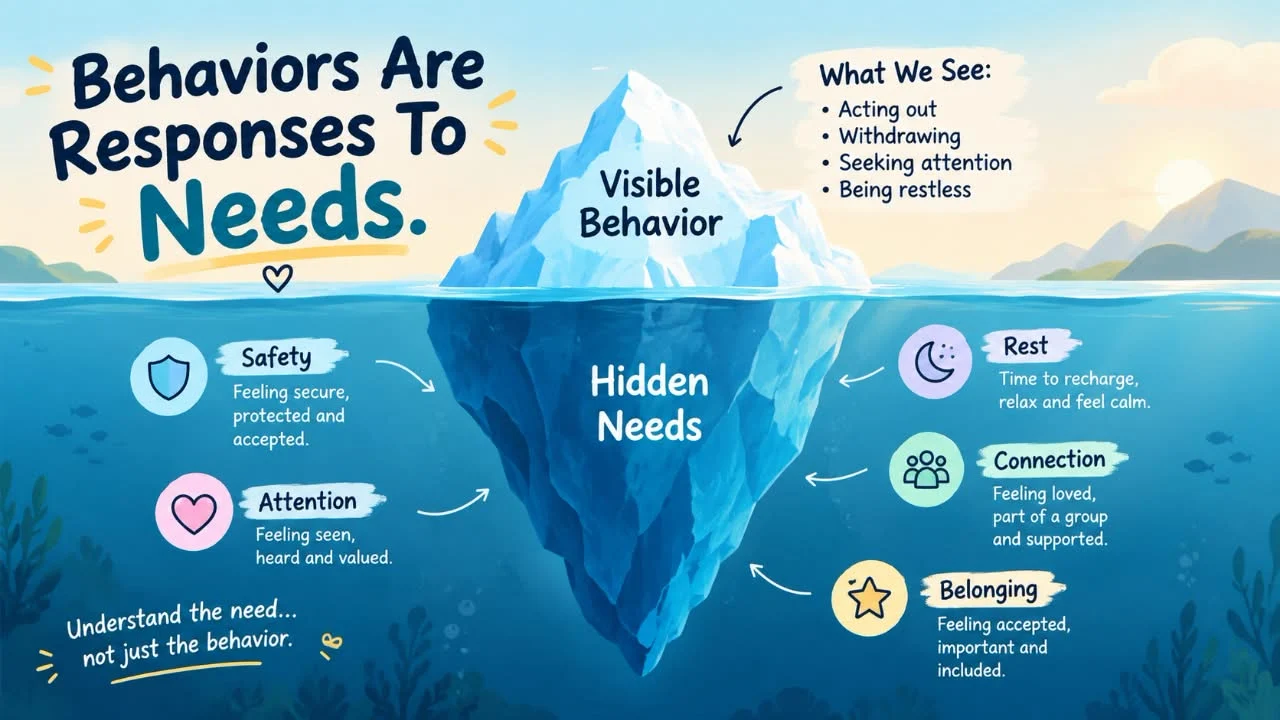
“Behaviors are responses to needs” means every action, even the frustrating ones, is a person’s way of trying to meet an unmet need. Instead of judging the behavior, look for the need underneath it.
Top ways to say it: “Behavior is communication,” “Every action meets a need,” “Look past the behavior, find the need,” “Kids do well when they can,” “Connection before correction.”
Ever dealt with a kid melting down in a grocery store, a friend who keeps canceling plans, or a coworker who snaps over nothing? The phrase “behaviors are responses to needs” explains all of it. It comes from child development and psychology, but honestly, it applies to everyone, including adults, partners, and even you on a bad day. The idea is simple. People do not act out for no reason. They act out because something is missing, like safety, attention, control, rest, or connection. Understanding this changes how you respond to tantrums, silence, attitude, and even your own reactions. This guide breaks down what the phrase means, how to use it in real conversations, and gives you ready to send replies for every situation.
What Does “Behaviors Are Responses To Needs” Actually Mean
At its core, this phrase means that behavior is a form of communication. When someone cannot express what they need with words, they show it through actions. A toddler throwing food might need attention. A teen slamming doors might need space. A partner going quiet might need reassurance. A coworker getting short might need support. The behavior is the signal, not the whole story. Once you start asking “what need is this behavior pointing to,” everything shifts. You stop taking things personally and start solving the real problem. This idea is huge in parenting, teaching, therapy, and relationships because it replaces punishment with curiosity and judgment with compassion.
Funny Responses To “Behaviors Are Responses To Needs”
“So when I eat chips at midnight, my need is happiness. Got it.”
Example: Used when someone brings up the phrase in a serious talk.
Meaning: You are making a light joke about your own habits.
“My need is snacks and my behavior is very consistent.”
Example: Used when you want to be funny about the concept.
Meaning: You are turning psychology into a food joke.
“So my procrastination is just my need for rest screaming.”
Example: Used when you are avoiding work.
Meaning: You are joking about your productivity struggles.
“My need is a nap. My behavior is being dramatic.”
Example: Used when you are tired and cranky.
Meaning: You are making a relatable joke.
“So when I ignore texts, my need is peace. Makes sense.”
Example: Used when someone calls you out for being distant.
Meaning: You are defending yourself playfully.
“My behavior says ‘leave me alone.’ My need says ‘please check on me.'”
Example: Used when you are feeling conflicted.
Meaning: You are being honest in a funny way.
“So my need is attention and my behavior is sending memes at 2am.”
Example: Used with close friends.
Meaning: You are joking about your texting habits.
“My need is control and my behavior is reorganizing everything.”
Example: Used when you are stressed.
Meaning: You are making a light self observation.
“So when I cry over small things, my need is a hug.”
Example: Used when you are emotional.
Meaning: You are being vulnerable with humor.
“My behavior is ‘do not talk to me.’ My need is ‘please talk to me.'”
Example: Used when you are moody.
Meaning: You are pointing out a common contradiction.
“So my need is coffee and my behavior is chaos before 9am.”
Example: Used in the morning.
Meaning: You are joking about your routine.
“My behavior is buying things. My need is serotonin.”
Example: Used when you shop too much.
Meaning: You are being funny about retail therapy.
Sassy Responses To “Behaviors Are Responses To Needs”
“So when you ignore me, your need is space. Cool, noted forever.”
Example: Used when someone goes silent on you.
Meaning: You are calling them out with attitude.
“My behavior is being annoyed. My need is for you to stop.”
Example: Used when someone is testing you.
Meaning: You are being direct and sassy.
“So your need is attention and your behavior is starting drama.”
Example: Used with a dramatic friend.
Meaning: You are pointing out their pattern.
“My need is respect and my behavior is leaving you on read.”
Example: Used when someone disrespects you.
Meaning: You are setting a boundary with sass.
“So when you snap at me, your need is a snack and a nap.”
Example: Used when someone is grumpy.
Meaning: You are teasing them playfully.
“My behavior is silence. My need is for you to figure it out.”
Example: Used when you are upset but not explaining.
Meaning: You are being cheeky and mysterious.
“So your need is control and your behavior is micromanaging me.”
Example: Used with a bossy person.
Meaning: You are calling out their habits.
“My need is peace and my behavior is blocking you.”
Example: Used when you are done with drama.
Meaning: You are being bold and final.
“So your behavior is rude and your need is attention. Makes sense.”
Example: Used when someone is being difficult.
Meaning: You are analyzing them with sass.
“My need is honesty and my behavior is calling you out.”
Example: Used when someone lies.
Meaning: You are standing your ground.
“So your need is validation and your behavior is fishing for compliments.”
Example: Used with a friend who does this.
Meaning: You are teasing them with insight.
“My behavior is walking away. My need is for you to chase me. Kidding, sort of.”
Example: Used in a flirty or dramatic moment.
Meaning: You are being playful and honest at once.
Flirty Responses To “Behaviors Are Responses To Needs”
“So my need is you and my behavior is texting you first.”
Example: Used when you want to be bold with a crush.
Meaning: You are flirting with a smart twist.
“My need is your attention and my behavior is very obvious.”
Example: Used when you want to be direct.
Meaning: You are showing interest with confidence.
“So my need is connection and my behavior is finding excuses to talk to you.”
Example: Used when you keep messaging your crush.
Meaning: You are admitting your crush with charm.
“My behavior is flirting. My need is for you to flirt back.”
Example: Used when you want to push things forward.
Meaning: You are being playful and clear.
“My need is your time and my behavior is asking you out.”
Example: Used when you want to make plans.
Meaning: You are flirting with purpose.
“So my need is butterflies and my behavior is texting you at midnight.”
Example: Used when you are into someone.
Meaning: You are being cute and honest.
“My behavior is smiling at my phone. My need is you.”
Example: Used when their message makes you happy.
Meaning: You are showing sweet interest.
“My need is to see you and my behavior is not very subtle.”
Example: Used when you want to meet up.
Meaning: You are flirting directly.
“So my need is your laugh and my behavior is bad jokes.”
Example: Used when you want to make them smile.
Meaning: You are flirting through humor.
“My behavior is overthinking. My need is reassurance from you.”
Example: Used when you are nervous about a crush.
Meaning: You are being vulnerable and flirty.
“My need is your heart and my behavior is working on it.”
Example: Used when you want to be bold.
Meaning: You are showing confident interest.
“My behavior is missing you. My need is for you to come over.”
Example: Used when you want them close.
Meaning: You are flirting with a clear hint.
Polite Responses To “Behaviors Are Responses To Needs”
“That makes sense, thank you for explaining it.”
Example: Used when someone shares the concept with you.
Meaning: You are acknowledging their insight respectfully.
“I appreciate you pointing that out.”
Example: Used in a thoughtful conversation.
Meaning: You are showing gratitude for their perspective.
“That is a helpful way to look at it.”
Example: Used when someone teaches you something new.
Meaning: You are being open and courteous.
“Thank you, I will keep that in mind.”
Example: Used in a polite learning moment.
Meaning: You are showing you value their words.
“I see what you mean, thanks for sharing.”
Example: Used in a friendly discussion.
Meaning: You are acknowledging their point kindly.
“That is a kind way to understand people.”
Example: Used when someone explains the idea gently.
Meaning: You are giving a respectful compliment.
“Thanks for the reminder, it is a good one.”
Example: Used in a calm conversation.
Meaning: You are showing appreciation.
“I agree, that is a thoughtful approach.”
Example: Used in a polite exchange.
Meaning: You are validating their view.
“Appreciate you bringing that up.”
Example: Used in a group setting.
Meaning: You are being gracious.
“That is a great point, thank you.”
Example: Used in a respectful reply.
Meaning: You are acknowledging their wisdom.
“I will try to look at it that way.”
Example: Used when you want to grow.
Meaning: You are being open and humble.
“Thanks, that really helps me understand.”
Example: Used in a sincere moment.
Meaning: You are showing genuine gratitude.
Professional Responses To “Behaviors Are Responses To Needs”
“That is a valuable framework for understanding team behavior.”
Example: Used in a leadership meeting.
Meaning: You are contributing professionally.
“I agree, addressing the need is more effective than reacting to the behavior.”
Example: Used in a workplace discussion.
Meaning: You are showing strategic thinking.
“This is a helpful lens for managing conflict at work.”
Example: Used in HR or management training.
Meaning: You are being constructive.
“Thanks for sharing, this applies well to client interactions.”
Example: Used in a professional setting.
Meaning: You are connecting the idea to work.
“That aligns with what we see in team dynamics.”
Example: Used in a meeting.
Meaning: You are validating the concept professionally.
“Great point, let us use this approach in our next review.”
Example: Used when planning strategy.
Meaning: You are being proactive and organized.
“I appreciate the reminder to look beneath the surface.”
Example: Used in a leadership context.
Meaning: You are showing emotional intelligence.
“This is a strong framework for supporting employees.”
Example: Used in a management conversation.
Meaning: You are being thoughtful and professional.
“Noted, I will keep this in mind during evaluations.”
Example: Used in HR or coaching.
Meaning: You are committing to a better approach.
“That is a useful perspective for our training session.”
Example: Used in a team setting.
Meaning: You are contributing value.
“Thanks, this helps me reframe a recent situation.”
Example: Used in a professional reflection.
Meaning: You are showing growth and awareness.
“I agree, meeting the need prevents the behavior from escalating.”
Example: Used in conflict resolution.
Meaning: You are showing insight and professionalism.
Creative Responses To “Behaviors Are Responses To Needs”
“So every tantrum is just a poem about an unmet need.”
Example: Used when you want to be poetic.
Meaning: You are reframing behavior beautifully.
“Behavior is the language. Needs are the message.”
Example: Used when you want a catchy line.
Meaning: You are summarizing the idea with style.
“Every action is a question. Every need is the answer.”
Example: Used in a thoughtful post.
Meaning: You are making the concept feel deep.
“We are all just walking needs with legs.”
Example: Used when you want to sound wise and funny.
Meaning: You are making a clever observation.
“Behavior is the tip of the iceberg. Needs are everything underneath.”
Example: Used when explaining the concept.
Meaning: You are using a strong metaphor.
“So the meltdown was never about the toy. It was about feeling seen.”
Example: Used when reflecting on parenting.
Meaning: You are showing deep understanding.
“Every behavior is a love letter written in a language we have not learned yet.”
Example: Used when you want to be moving.
Meaning: You are reframing behavior with heart.
“Needs do not disappear. They just change costumes.”
Example: Used when you want a witty line.
Meaning: You are saying needs show up in different ways.
“The behavior is the smoke. The need is the fire.”
Example: Used when explaining cause and effect.
Meaning: You are making the concept clear.
“We are not bad. We are just unmet needs in motion.”
Example: Used when you want to be empowering.
Meaning: You are offering a compassionate view.
“Every reaction is a request in disguise.”
Example: Used in a thoughtful conversation.
Meaning: You are simplifying the idea beautifully.
“So the attitude was just a need wearing a costume.”
Example: Used when you want to be creative.
Meaning: You are giving behavior a new image.
Sarcastic Responses To “Behaviors Are Responses To Needs”
“So my need is drama and my behavior is texting my ex. Cool.”
Example: Used when you want to joke about bad habits.
Meaning: You are being dry and funny.
“My need is validation and my behavior is posting everything.”
Example: Used when you want to laugh at yourself.
Meaning: You are being sarcastic about social media.
“So when I yell at traffic, my need is a nap. Noted.”
Example: Used when you are stressed.
Meaning: You are making a dry joke.
“My behavior is procrastinating. My need is to avoid reality.”
Example: Used when you are avoiding tasks.
Meaning: You are being honest with sarcasm.
“So my need is control and my behavior is checking my phone 400 times.”
Example: Used when you are anxious.
Meaning: You are poking fun at yourself.
“My behavior is being late. My need is chaos.”
Example: Used when you are always behind.
Meaning: You are joking about your habits.
“So when I ghost everyone, my need is a nap and a snack.”
Example: Used when you disappear.
Meaning: You are being cheeky about your absence.
“My need is peace and my behavior is avoiding all my responsibilities.”
Example: Used when you are overwhelmed.
Meaning: You are making a dry observation.
“So my need is attention and my behavior is being dramatic. Shocking.”
Example: Used when you are called out.
Meaning: You are owning it with humor.
“My behavior is complaining. My need is for someone to fix it.”
Example: Used when you vent.
Meaning: You are being honest with a twist.
“So my need is rest and my behavior is scrolling for three hours.”
Example: Used at night.
Meaning: You are joking about your bedtime routine.
“My behavior is ignoring red flags. My need is therapy.”
Example: Used when you want to be real and funny.
Meaning: You are admitting a hard truth with humor.
Cute Responses To “Behaviors Are Responses To Needs”
“So when I hug you, my need is comfort.”
Example: Used with a partner or close friend.
Meaning: You are being sweet and honest.
“My behavior is smiling at you. My need is your smile back.”
Example: Used when you want to be affectionate.
Meaning: You are showing gentle love.
“So when I check on you, my need is to know you are okay.”
Example: Used with someone you care about.
Meaning: You are expressing care sweetly.
“My behavior is sending you memes. My need is your laugh.”
Example: Used with close friends.
Meaning: You are being cute and playful.
“So when I sit close to you, my need is your warmth.”
Example: Used in a tender moment.
Meaning: You are being affectionate.
“My behavior is good morning texts. My need is to be part of your day.”
Example: Used with a partner.
Meaning: You are showing sweet devotion.
“So when I ask about your day, my need is connection.”
Example: Used in a caring relationship.
Meaning: You are expressing genuine interest.
“My behavior is cooking for you. My need is to see you happy.”
Example: Used with loved ones.
Meaning: You are showing love through action.
“So when I hold your hand, my need is to feel close.”
Example: Used in a sweet moment.
Meaning: You are expressing tenderness.
“My behavior is remembering small things. My need is to make you feel seen.”
Example: Used with someone special.
Meaning: You are showing deep care.
“So when I say I miss you, my need is you.”
Example: Used when you are far apart.
Meaning: You are being honest and sweet.
“My behavior is loving you. My need is you too.”
Example: Used in a romantic moment.
Meaning: You are expressing simple devotion.
Dramatic Responses To “Behaviors Are Responses To Needs”
“So my meltdown at 3am was a cry for sleep. The drama.”
Example: Used when you are exhausted.
Meaning: You are being theatrical and funny.
“My behavior is spiraling. My need is a hug and a nap.”
Example: Used when you are overwhelmed.
Meaning: You are being dramatic but honest.
“So my need is peace and my behavior is writing a whole essay about it.”
Example: Used when you vent.
Meaning: You are joking about your dramatic style.
“My behavior is crying over a commercial. My need is therapy.”
Example: Used when you are emotional.
Meaning: You are being over the top in a funny way.
“So when I slam doors, my need is attention. Wow, groundbreaking.”
Example: Used when you are called out.
Meaning: You are owning it with drama.
“My behavior is screaming into a pillow. My need is a vacation.”
Example: Used when you are stressed.
Meaning: You are making a dramatic joke.
“So my need is control and my behavior is a full breakdown over plans.”
Example: Used when things go wrong.
Meaning: You are being theatrical about your feelings.
“My behavior is dramatic exits. My need is for you to follow me.”
Example: Used in a playful argument.
Meaning: You are being over the top on purpose.
“So my need is rest and my behavior is a whole crisis.”
Example: Used when you are tired.
Meaning: You are joking about your low energy.
“My behavior is writing paragraphs. My need is for you to read them.”
Example: Used when you send long texts.
Meaning: You are being dramatic and honest.
“So my need is love and my behavior is a soap opera.”
Example: Used when you are emotional.
Meaning: You are making a funny comparison.
“My behavior is being extra. My need is to be seen.”
Example: Used when you are called dramatic.
Meaning: You are owning it with flair.
Chill And Casual Responses To “Behaviors Are Responses To Needs”
“Yeah, that makes sense.”
Example: Used in a relaxed conversation.
Meaning: You are agreeing simply.
“Totally, everyone is just trying to get their needs met.”
Example: Used in a chill discussion.
Meaning: You are summarizing the idea easily.
“For sure, behavior is just communication.”
Example: Used when you want to keep it simple.
Meaning: You are agreeing in a laid back way.
“Makes sense, we all just want to feel okay.”
Example: Used in a casual talk.
Meaning: You are keeping it real and calm.
“Yeah, I try to remember that with my kids.”
Example: Used with other parents.
Meaning: You are sharing your approach casually.
“True, it changes how you see things.”
Example: Used in a relaxed chat.
Meaning: You are agreeing thoughtfully.
“Cool way to look at it.”
Example: Used when you want to be easygoing.
Meaning: You are acknowledging the idea simply.
“Yeah, needs first, behavior second.”
Example: Used when you want a quick summary.
Meaning: You are simplifying the concept.
“Makes sense, everyone is doing their best.”
Example: Used in a chill conversation.
Meaning: You are being kind and casual.
“True, it is all about what is underneath.”
Example: Used in a low key talk.
Meaning: You are agreeing without overexplaining.
“Yeah, I have seen that play out a lot.”
Example: Used when you want to relate.
Meaning: You are sharing experience casually.
“Cool, I will keep that in mind.”
Example: Used in a relaxed reply.
Meaning: You are being open and easygoing.
Confident Responses To “Behaviors Are Responses To Needs”
“Exactly, and once you see the need, the behavior makes sense.”
Example: Used when you want to sound sure.
Meaning: You are showing understanding and confidence.
“That is the key to everything. Meet the need, change the behavior.”
Example: Used in a leadership moment.
Meaning: You are stating a strong belief.
“Yes, and that is why punishment rarely works long term.”
Example: Used in a thoughtful debate.
Meaning: You are showing conviction.
“I agree, behavior is never random.”
Example: Used when you want to be clear.
Meaning: You are affirming the concept firmly.
“That is exactly how I approach parenting.”
Example: Used with other parents.
Meaning: You are sharing your confident method.
“Yes, and it applies to adults too, not just kids.”
Example: Used when you want to expand the idea.
Meaning: You are showing deeper insight.
“Absolutely, the need is always the real message.”
Example: Used in a confident discussion.
Meaning: You are stating the core idea boldly.
“That is why I always ask what is going on underneath.”
Example: Used in a coaching moment.
Meaning: You are showing your approach with certainty.
“Yes, and it changed how I handle conflict.”
Example: Used when sharing experience.
Meaning: You are showing growth and confidence.
“Exactly, meet the need and the behavior softens.”
Example: Used in a parenting or teaching talk.
Meaning: You are stating a proven principle.
“I agree, this is a game changer for relationships.”
Example: Used in a serious conversation.
Meaning: You are showing strong support for the idea.
“Yes, behavior is just a signal. The need is the message.”
Example: Used when you want a strong summary.
Meaning: You are expressing the concept with certainty.
Emotional Responses To “Behaviors Are Responses To Needs”
“This hits hard because I see it in myself.”
Example: Used when you relate deeply.
Meaning: You are being honest and vulnerable.
“Honestly, this made me rethink how I treat people.”
Example: Used in a reflective moment.
Meaning: You are sharing personal growth.
“I wish someone had told me this years ago.”
Example: Used when you feel moved.
Meaning: You are expressing regret and insight.
“This makes me want to be more patient.”
Example: Used when you feel inspired.
Meaning: You are showing emotional maturity.
“It is hard to look past the behavior when you are hurt.”
Example: Used when you are struggling.
Meaning: You are being honest about the challenge.
“I needed this reminder today.”
Example: Used when you are having a tough time.
Meaning: You are expressing gratitude and emotion.
“This is why I try to ask instead of assume.”
Example: Used in a heartfelt conversation.
Meaning: You are showing empathy.
“It breaks my heart that so many needs go unseen.”
Example: Used when you feel deeply.
Meaning: You are expressing compassion.
“This changed the way I parent my kids.”
Example: Used with other parents.
Meaning: You are sharing something meaningful.
“I see myself in this and it is humbling.”
Example: Used in a reflective talk.
Meaning: You are being honest and self aware.
“It is easier to judge than to understand. This reminds me to understand.”
Example: Used when you want to be thoughtful.
Meaning: You are showing emotional growth.
“This makes me want to hug my younger self.”
Example: Used when you feel emotional.
Meaning: You are expressing deep compassion.
Sweet Responses To “Behaviors Are Responses To Needs”
“This is such a kind way to see people.”
Example: Used when you appreciate the idea.
Meaning: You are giving a warm compliment.
“I love that you think this way.”
Example: Used with a thoughtful person.
Meaning: You are showing affection and respect.
“This makes me want to be gentler with everyone.”
Example: Used in a tender moment.
Meaning: You are expressing sweet growth.
“You always see the best in people.”
Example: Used with someone you admire.
Meaning: You are giving heartfelt praise.
“This is why I love talking to you.”
Example: Used with a close friend.
Meaning: You are showing appreciation.
“That is such a beautiful perspective.”
Example: Used when you feel moved.
Meaning: You are giving a sincere compliment.
“Thank you for sharing this, it means a lot.”
Example: Used in a warm exchange.
Meaning: You are expressing genuine gratitude.
“I hope I can be this understanding too.”
Example: Used when you feel inspired.
Meaning: You are showing humble sweetness.
“This is the kind of thinking the world needs.”
Example: Used when you want to uplift.
Meaning: You are giving warm encouragement.
“You have such a caring heart.”
Example: Used with someone special.
Meaning: You are giving a sweet compliment.
“This reminds me to lead with love.”
Example: Used in a tender conversation.
Meaning: You are expressing a soft intention.
“I am saving this because it is so true.”
Example: Used when you want to remember it.
Meaning: You are showing appreciation sweetly.
Clever Responses To “Behaviors Are Responses To Needs”
“Behavior is the headline. Needs are the full article.”
Example: Used when you want a smart summary.
Meaning: You are explaining it with a media metaphor.
“Every action is a sentence. Every need is the paragraph.”
Example: Used in a thoughtful post.
Meaning: You are making the idea feel literary.
“We are all just needs in motion.”
Example: Used when you want a catchy line.
Meaning: You are summarizing it beautifully.
“The behavior is the symptom. The need is the diagnosis.”
Example: Used when explaining the concept.
Meaning: You are using a smart comparison.
“Needs are the roots. Behavior is the fruit.”
Example: Used when you want a nature metaphor.
Meaning: You are showing cause and effect.
“Every reaction is a request.”
Example: Used in a calm discussion.
Meaning: You are simplifying the idea elegantly.
“Behavior is the door. The need is the room behind it.”
Example: Used when you want to be poetic.
Meaning: You are making the concept visual.
“You cannot fix the behavior without feeding the need.”
Example: Used when you want a strong line.
Meaning: You are stating a practical truth.
“Needs do not go away. They just find new ways to show up.”
Example: Used when you want to sound wise.
Meaning: You are explaining how needs persist.
“Every tantrum is a tiny TED talk about an unmet need.”
Example: Used when you want to be witty.
Meaning: You are making the idea funny and smart.
“The behavior is the alarm. The need is the fire.”
Example: Used when explaining urgency.
Meaning: You are making the concept clear.
“We are not problems to fix. We are needs to meet.”
Example: Used when you want to be empowering.
Meaning: You are reframing the whole idea.
FAQs
What does “behaviors are responses to needs” mean?
It means every behavior, even a difficult one, is a person’s way of trying to meet an unmet need like safety, attention, or rest.
Who came up with this idea?
It comes from child development and psychology, and it is widely used in parenting, teaching, and therapy approaches that focus on connection over punishment.
Does this apply to adults too?
Yes. Adults also act out when their needs are not met. It just looks different, like snapping, silence, or avoiding people.
How do I figure out the need behind a behavior?
Ask yourself what the person might be missing. Are they tired, scared, lonely, overwhelmed, or needing control? The behavior often points right to it.
Is it okay to still set boundaries?
Absolutely. Understanding the need does not mean ignoring the behavior. You can be kind and still hold limits.
Conclusion
“Behaviors are responses to needs” is one of those ideas that quietly changes everything. It turns frustration into curiosity and judgment into compassion. Whether you are dealing with a toddler, a teen, a partner, a coworker, or your own tough days, looking for the need underneath the behavior makes you a calmer, kinder, and smarter human. You do not have to get it perfect. Just pause, ask what is really going on, and respond to that. Save this guide for the moments you need a reminder, share it with someone who works with people, and keep leading with understanding.
Read More Related Articles :
- 350+ Empathic Response Examples | Thoughtful, Caring & Supportive Replies In 2026
- 350+ Definitions Of Response | That Actually Make Sense (With Examples and Replies)In 2026
- 350+ “Behaviors Are Responses To Needs | Quotes, Insights And Replies That Actually Hit In 2026

Robert Bennett is a passionate writer and blogger who turns everyday ideas into engaging stories and thoughtful insights.
Writing for RespondLabs.com, he brings a clear, relatable voice to topics that matter.
12 thoughts on “350+ “Behaviors Are Responses To Needs | Quotes, Insights And Replies That Actually Hit In 2026”