Quick Answer
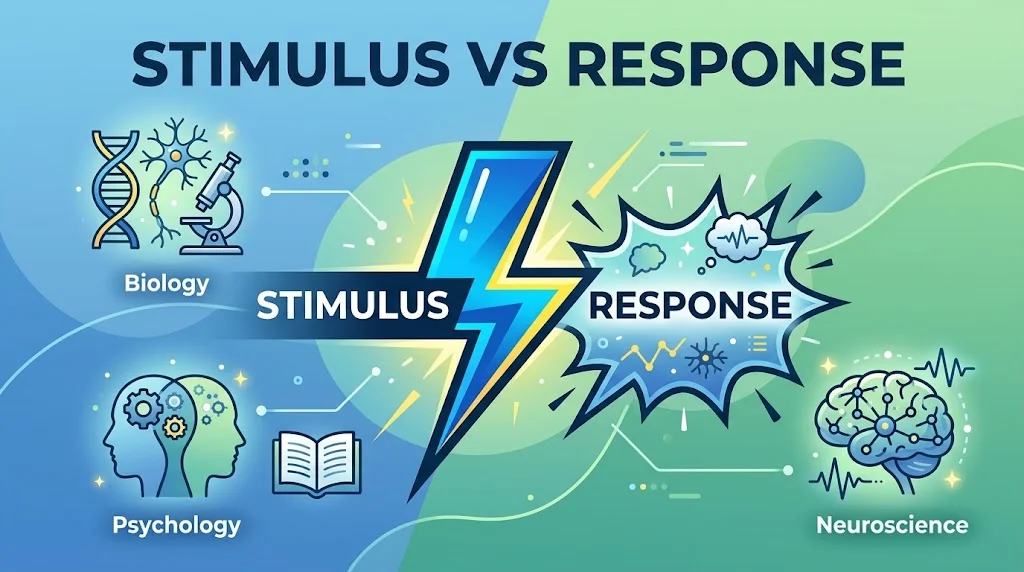
A stimulus is the trigger, signal, or change that causes a reaction. A response is the reaction itself. The stimulus comes first. The response follows.
Top ways to say it: Stimulus is the cause, response is the effect. Stimulus is the question, response is the answer. Stimulus is the input, response is the output.
You touch a hot pan and pull your hand back. The heat is the stimulus. Pulling your hand back is the response. Simple, right? But then someone asks you to explain the difference in a science class, and suddenly your brain goes blank. The “stimulus vs response” question comes up constantly because the two words are always paired but often confused. One is the trigger. One is the reaction. One comes first. One comes second. Understanding the difference matters in biology, psychology, neuroscience, and even everyday life. This guide breaks down exactly what each one means, how they work together, and gives you tons of examples so the difference finally clicks.
What Is A Stimulus?
A stimulus is any change, signal, or event that triggers a reaction in an organism or system. It can be internal, like hunger or a headache. It can be external, like light, sound, heat, or touch. 1st In biology, stimuli are what keep living things alive because they prompt action.2nd In psychology, a stimulus can be anything from a word to a facial expression. In physics, it can be a force or energy change. The key thing to remember is that a stimulus is always the trigger. It is what starts the process.
What Is A Response?
A response is the reaction that follows a stimulus. It is what the organism or system does after receiving the signal.1st In biology, it could be a muscle moving, a gland secreting, or a plant turning toward light.2nd In psychology, it could be an emotion or behavior.3rd In physics, it could be a material expanding.4rth In technology, it could be a system executing a command. The key thing to remember is that a response is always the result. It is what happens because of the stimulus.
Stimulus vs Response: The Key Differences
Order: Stimulus comes first. Response comes second.
Role: Stimulus is the trigger. Response is the reaction.
Nature: Stimulus is the input. Response is the output.
Control: Stimulus can be external or internal. Response can be voluntary or involuntary.
Timing: Stimulus happens before. Response happens after.
Purpose: Stimulus signals change. Response handles the change.
Measurement: Stimulus is measured as a signal. Response is measured as a reaction.
Examples: Heat is a stimulus. Sweating is a response.
Funny Stimulus vs Response Examples
“Stimulus is my alarm. Response is me hitting snooze five times.”
Example: Used when explaining the concept casually.
Meaning: You are making a relatable morning joke.
“Stimulus is a bug. Response is me screaming and running.”
Example: Used to explain the difference playfully.
Meaning: You are using a real life fear.
“Stimulus is a notification. Response is ignoring it forever.”
Example: Used in a modern explanation.
Meaning: You are being funny about phone habits.
“Stimulus is Monday. Response is sadness.”
Example: Used in a casual explanation.
Meaning: You are making a relatable joke.
“Stimulus is the fridge opening. Response is my dog appearing out of nowhere.”
Example: Used in a funny example.
Meaning: You are linking science to pet behavior.
“Stimulus is a group chat. Response is muting it.”
Example: Used in a modern example.
Meaning: You are joking about group chat fatigue.
“Stimulus is a sale. Response is my bank account crying.”
Example: Used in a lighthearted way.
Meaning: You are being honest about shopping habits.
“Stimulus is pizza. Response is happiness.”
Example: Used in a simple funny example.
Meaning: You are making a food joke.
“Stimulus is a text from my crush. Response is rewriting my reply ten times.”
Example: Used in a relatable moment.
Meaning: You are being honest and funny.
“Stimulus is a deadline. Response is panic.”
Example: Used in a student joke.
Meaning: You are being relatable.
“Stimulus is someone saying ‘we need to talk.’ Response is my stomach dropping.”
Example: Used in a dramatic moment.
Meaning: You are being honest with humor.
“Stimulus is a spider. Response is a new personal record in running.”
Example: Used in a playful tone.
Meaning: You are making a fear joke.
Sassy Stimulus vs Response Examples
“Stimulus is your text. Response is my silence. Science says you are failing.”
Example: Used when someone ignores you.
Meaning: You are turning science into a callout.
“Stimulus is disrespect. Response is distance.”
Example: Used in a strong statement.
Meaning: You are setting a firm boundary.
“Stimulus is drama. Response is me exiting the group chat.”
Example: Used in a cheeky explanation.
Meaning: You are calling out toxic energy.
“Stimulus is your excuse. Response is my eye roll.”
Example: Used when someone is difficult.
Meaning: You are being witty and direct.
“Stimulus is chaos. Response is me disappearing.”
Example: Used in a playful explanation.
Meaning: You are being cheeky and clear.
“Stimulus is a red flag. Response is me walking away.”
Example: Used in a confident moment.
Meaning: You are showing self respect.
“Stimulus is your attitude. Response is my exit.”
Example: Used in a bold statement.
Meaning: You are setting a boundary with sass.
“Stimulus is a fake friend. Response is a blocked number.”
Example: Used in a strong statement.
Meaning: You are showing you do not tolerate disrespect.
“Stimulus is bad vibes. Response is leaving the room.”
Example: Used in a cheeky explanation.
Meaning: You are protecting your peace.
“Stimulus is your drama. Response is my silence.”
Example: Used in a playful way.
Meaning: You are being cheeky and clear.
“Stimulus is a waste of time. Response is me moving on.”
Example: Used in a confident statement.
Meaning: You are showing growth.
“Stimulus is disrespect. Response is goodbye.”
Example: Used in a final text.
Meaning: You are ending things with clarity.
Flirty Stimulus vs Response Examples
“Stimulus is your smile. Response is my heart racing.”
Example: Used with a crush.
Meaning: You are flirting with a science twist.
“Stimulus is your voice. Response is butterflies.”
Example: Used when you want to be charming.
Meaning: You are being romantic and clever.
“Stimulus is your text. Response is me smiling at my phone.”
Example: Used in a flirty message.
Meaning: You are showing sweet interest.
“Stimulus is you walking in. Response is me forgetting how to talk.”
Example: Used when you want to be smooth.
Meaning: You are flirting with confidence.
“Stimulus is your laugh. Response is me falling harder.”
Example: Used in a cute reply.
Meaning: You are expressing attraction.
“Stimulus is your name on my screen. Response is instant happiness.”
Example: Used in a romantic line.
Meaning: You are flirting with charm.
“Stimulus is your eyes. Response is me getting lost.”
Example: Used in a sweet moment.
Meaning: You are showing affection.
“Stimulus is your touch. Response is my whole body relaxing.”
Example: Used when you want to be bold.
Meaning: You are expressing deep attraction.
“Stimulus is your attention. Response is me wanting more.”
Example: Used in a tender reply.
Meaning: You are showing deep interest.
“Stimulus is your kindness. Response is my gratitude.”
Example: Used in a playful flirty way.
Meaning: You are being cute and honest.
“Stimulus is your presence. Response is my peace.”
Example: Used in a romantic moment.
Meaning: You are expressing sweet feelings.
“Stimulus is you. Response is everything in me lighting up.”
Example: Used when you want to be poetic.
Meaning: You are flirting with heart.
Polite Stimulus vs Response Examples
“A stimulus is a trigger, and a response is the reaction to it.”
Example: Used in a polite explanation.
Meaning: You are giving a clear definition.
“Thank you for asking. The stimulus comes first, then the response.”
Example: Used in a friendly conversation.
Meaning: You are being gracious and helpful.
“That is a great question. The stimulus is the cause, and the response is the effect.”
Example: Used in a polite discussion.
Meaning: You are acknowledging and explaining.
“Simply put, a stimulus triggers a response.”
Example: Used in a calm reply.
Meaning: You are keeping it clear and courteous.
“A stimulus can be internal or external, and the response follows it.”
Example: Used in a thoughtful explanation.
Meaning: You are being thorough and polite.
“Thanks for the question. The stimulus is the signal and the response is the reaction.”
Example: Used in a polite setting.
Meaning: You are showing respect.
“It is how living things and systems answer changes in their surroundings.”
Example: Used in a warm exchange.
Meaning: You are being friendly and informative.
“That is a good one. Stimulus is the input and response is the output.”
Example: Used in a courteous talk.
Meaning: You are being helpful.
“A stimulus is a change, and a response is the answer to it. Happy to explain more.”
Example: Used in a polite conversation.
Meaning: You are offering continued help.
“In science, the stimulus is the trigger and the response is the reaction.”
Example: Used in a simple polite reply.
Meaning: You are being clear and kind.
“Thanks for asking. The stimulus starts it and the response finishes it.”
Example: Used in a respectful reply.
Meaning: You are ending with courtesy.
“It is the result of a stimulus acting on a living thing.”
Example: Used in a friendly explanation.
Meaning: You are being supportive.
Professional Stimulus vs Response Examples
“In biology, a stimulus is a change in the environment, and a response is how the organism reacts.”
Example: Used in a formal explanation.
Meaning: You are giving a precise definition.
“The stimulus is the input, and the response is the output of the system.”
Example: Used in a technical setting.
Meaning: You are being clear and professional.
“In neuroscience, a stimulus triggers electrical activity, and the response is the resulting signal.”
Example: Used in an academic context.
Meaning: You are explaining with precision.
“In psychology, the stimulus is the situation, and the response is the behavior.”
Example: Used in a professional discussion.
Meaning: You are defining it scientifically.
“Both stimulus and response can be measured in time, intensity, and duration.”
Example: Used in a research setting.
Meaning: You are showing expertise.
“In medicine, the stimulus is the trigger, and the response is how the body reacts.”
Example: Used in a clinical discussion.
Meaning: You are being specific.
“The stimulus is the change, and the response is the reaction of the system.”
Example: Used in engineering.
Meaning: You are giving a technical definition.
“In chemistry, the stimulus is the added substance, and the response is the observable change.”
Example: Used in a lab report.
Meaning: You are explaining clearly.
“A stimulus is any measurable trigger, and a response is any measurable reaction.”
Example: Used in a scientific paper.
Meaning: You are being accurate.
“In technology, the stimulus is the command, and the response is the system output.”
Example: Used in a tech discussion.
Meaning: You are showing knowledge.
“The stimulus response pathway is central to understanding behavior.”
Example: Used in a formal presentation.
Meaning: You are explaining the process.
“Clear understanding of stimulus and response is critical in research.”
Example: Used in a professional setting.
Meaning: You are adding practical value.
Creative Stimulus vs Response Examples
“A stimulus is the question the world asks. A response is your answer.”
Example: Used when you want to be poetic.
Meaning: You are giving a beautiful definition.
“The stimulus is the stone. The response is the ripple.”
Example: Used in a thoughtful post.
Meaning: You are being reflective.
“A stimulus is the door. A response is the room behind it.”
Example: Used when you want to sound wise.
Meaning: You are making the concept feel deep.
“The stimulus is the comma. The response is the sentence.”
Example: Used when you want a clever line.
Meaning: You are saying responses complete the story.
“A stimulus is the conversation the world starts with you.”
Example: Used in a creative discussion.
Meaning: You are making it feel grand.
“The stimulus is the spark. The response is the fire.”
Example: Used when you want to be original.
Meaning: You are giving a unique take.
“The stimulus is the seed. The response is the bloom.”
Example: Used in a thoughtful talk.
Meaning: You are using a strong image.
“The stimulus is the first draft. The response is the final copy.”
Example: Used when you want to inspire.
Meaning: You are linking trigger to result.
“The stimulus is the punctuation. The response is the meaning.”
Example: Used in a creative explanation.
Meaning: You are making it feel literary.
“The stimulus is the heartbeat. The response is the breath.”
Example: Used when you want to be dramatic.
Meaning: You are giving a vivid definition.
“The stimulus is the question the moment was waiting for. The response is the answer.”
Example: Used in a poetic reply.
Meaning: You are making it feel meaningful.
“The stimulus is the story starter. The response is the plot.”
Example: Used in a reflective mood.
Meaning: You are linking action to narrative.
Sarcastic Stimulus vs Response Examples
“A stimulus is a trigger. A response is a reaction. You should try one.”
Example: Used when someone ignores you.
Meaning: You are being dry and funny.
“Stimulus is my message. Response is your silence. Science says you are failing.”
Example: Used in a playful way.
Meaning: You are using science to tease.
“In science, every stimulus has a response. Apparently not in your texting habits.”
Example: Used when someone is slow.
Meaning: You are mixing science with sass.
“Stimulus is a question. Response is your vague reply. Science weeps.”
Example: Used in a sarcastic explanation.
Meaning: You are poking fun at their style.
“A stimulus is a reaction trigger. Yours to my texts is nonexistent.”
Example: Used when someone ignores you.
Meaning: You are being cheeky.
“Stimulus and response. You provide the first, I am still waiting for the second.”
Example: Used in a sassy way.
Meaning: You are calling them out with science.
“A response is feedback. Here is mine. Do better.”
Example: Used when someone underperforms.
Meaning: You are being cheeky.
“Stimulus is a deadline. Response is panic. Very scientific.”
Example: Used in a student joke.
Meaning: You are being relatable.
“A stimulus is a change. Your response is avoidance. Fascinating.”
Example: Used in a dry tone.
Meaning: You are being witty.
“Stimulus is a red flag. Response is denial. Classic.”
Example: Used in a cheeky explanation.
Meaning: You are poking fun at patterns.
“A stimulus is a text. Your response is a rumor. Science is confused.”
Example: Used when someone barely responds.
Meaning: You are joking about their absence.
“Stimulus is a group project. Response is disappearing. We have all seen it.”
Example: Used in a funny example.
Meaning: You are making a school joke.
Cute Stimulus vs Response Examples
“Stimulus is your smile. Response is my heart melting.”
Example: Used with a partner or close friend.
Meaning: You are being sweet and scientific.
“Stimulus is your laugh. Response is my happiness.”
Example: Used in a tender moment.
Meaning: You are showing affection.
“Stimulus is your text. Response is my smile.”
Example: Used in a sweet chat.
Meaning: You are showing genuine care.
“Stimulus is your presence. Response is my peace.”
Example: Used in a warm reply.
Meaning: You are expressing comfort.
“Stimulus is your kindness. Response is my gratitude.”
Example: Used in a cute message.
Meaning: You are linking science to love.
“Stimulus is your voice. Response is my calm.”
Example: Used with a close person.
Meaning: You are showing sweet connection.
“Stimulus is your hug. Response is my whole day getting better.”
Example: Used in a loving moment.
Meaning: You are sharing warm feelings.
“Stimulus is your attention. Response is my joy.”
Example: Used in a tender tone.
Meaning: You are giving a sweet compliment.
“Stimulus is your name. Response is my heart skipping.”
Example: Used with someone you like.
Meaning: You are showing sweet interest.
“Stimulus is your love. Response is me giving it right back.”
Example: Used in a gentle moment.
Meaning: You are expressing comfort.
“Stimulus is your smile. Response is mine.”
Example: Used in a warm tone.
Meaning: You are giving gentle encouragement.
“Stimulus is you. Response is always yes.”
Example: Used in a sweet reply.
Meaning: You are expressing appreciation.
Dramatic Stimulus vs Response Examples
“Stimulus is the lightning. Response is the thunder.”
Example: Used when you want to be theatrical.
Meaning: You are giving a dramatic definition.
“Stimulus is the setup. Response is the plot twist.”
Example: Used in a storytelling mood.
Meaning: You are making it cinematic.
“Stimulus is the curtain rising. Response is the next act.”
Example: Used when you want to sound grand.
Meaning: You are adding flair.
“Stimulus is the echo. Response is the silence after.”
Example: Used in a poetic moment.
Meaning: You are being dramatic and deep.
“Stimulus is the shock. Response is the heartbeat after.”
Example: Used when you want to be intense.
Meaning: You are giving a vivid image.
“Stimulus is the whisper. Response is the roar.”
Example: Used in a theatrical reply.
Meaning: You are making it feel epic.
“Stimulus is the cliffhanger. Response is the answer.”
Example: Used when you want to be funny and grand.
Meaning: You are exaggerating for effect.
“Stimulus is the dark. Response is the spotlight.”
Example: Used in a dramatic explanation.
Meaning: You are making it feel important.
“Stimulus is the twist. Response is the gasp.”
Example: Used when you want to be mysterious.
Meaning: You are adding suspense.
“Stimulus is the first scene. Response is the finale.”
Example: Used when you want to be clever.
Meaning: You are linking it to storytelling.
“Stimulus is the silence. Response is the scream.”
Example: Used in a bold statement.
Meaning: You are being dramatic and powerful.
“Stimulus is the moment everything changes. Response is everything after.”
Example: Used when you want to sound deep.
Meaning: You are giving it weight.
Chill And Casual Stimulus vs Response Examples
“Stimulus is the trigger. Response is the reaction.”
Example: Used in a relaxed conversation.
Meaning: You are keeping it simple.
“Basically the cause and the effect.”
Example: Used in a casual chat.
Meaning: You are explaining easily.
“Stimulus comes first. Response comes after.”
Example: Used in a low key talk.
Meaning: You are being clear and calm.
“One is the signal. One is the answer. Simple.”
Example: Used in a chill discussion.
Meaning: You are keeping it brief.
“Stimulus is what happens. Response is what you do.”
Example: Used in everyday talk.
Meaning: You are being straightforward.
“It is input and output. Nothing complicated.”
Example: Used in a relaxed reply.
Meaning: You are simplifying the idea.
“Stimulus is the trigger. That is it.”
Example: Used when you want to be direct.
Meaning: You are keeping it easy.
“It is how something reacts. No stress.”
Example: Used in a casual moment.
Meaning: You are being laid back.
“Stimulus is the change. Response is the reaction. Easy.”
Example: Used in a simple explanation.
Meaning: You are keeping it short.
“It is cause and effect. That is all.”
Example: Used in a chill tone.
Meaning: You are being clear and calm.
“Stimulus is what starts it. Response is what follows.”
Example: Used in a casual setting.
Meaning: You are defining it simply.
“It is just a trigger and a reaction. Nothing more.”
Example: Used in a relaxed talk.
Meaning: You are keeping it light.
Confident Stimulus vs Response Examples
“A stimulus is a trigger, and a response is the reaction. Simple science.”
Example: Used when you want to sound sure.
Meaning: You are showing knowledge.
“In biology, the stimulus comes first and the response follows.”
Example: Used in a confident explanation.
Meaning: You are stating a core truth.
“The stimulus is the input, and the response is the output.”
Example: Used in a strong statement.
Meaning: You are showing certainty.
“In science, understanding both is the key to understanding behavior.”
Example: Used in a bold claim.
Meaning: You are emphasizing importance.
“A stimulus is a change, and a response is the answer to it.”
Example: Used when you want to be clear.
Meaning: You are affirming the concept firmly.
“In neuroscience, the stimulus triggers the response in milliseconds.”
Example: Used in a confident discussion.
Meaning: You are showing expertise.
“The stimulus is the cause, and the response is the effect.”
Example: Used in a strong statement.
Meaning: You are stating a principle.
“In psychology, the stimulus is the situation and the response is the behavior.”
Example: Used in a bold explanation.
Meaning: You are showing insight.
“A stimulus and a response are never random.”
Example: Used when you want to be clear.
Meaning: You are affirming the concept firmly.
“In medicine, the stimulus is the trigger and the response is how the body fights back.”
Example: Used in a confident tone.
Meaning: You are showing knowledge.
“The stimulus is the question, and the response is the answer.”
Example: Used in a strong statement.
Meaning: You are stating importance.
“In science, the stimulus response pathway explains everything.”
Example: Used when you want a strong summary.
Meaning: You are expressing certainty.
Emotional Stimulus vs Response Examples
“A stimulus is what happens to you. A response is what you do with it.”
Example: Used when you relate deeply.
Meaning: You are being honest and simple.
“In science, the stimulus is the trigger, and the response is proof that something mattered.”
Example: Used in a reflective moment.
Meaning: You are sharing personal insight.
“The response is the body’s way of protecting itself from the stimulus.”
Example: Used when you feel moved.
Meaning: You are expressing appreciation for biology.
“It is amazing how fast the body responds to a stimulus.”
Example: Used when you feel inspired.
Meaning: You are showing awe.
“A response to a stimulus can save your life in a split second.”
Example: Used when you are reflecting.
Meaning: You are being honest about survival.
“I never thought about how many stimulus response cycles happen every day.”
Example: Used when you are amazed.
Meaning: You are expressing wonder.
“This concept makes me appreciate how complex we are.”
Example: Used in a heartfelt conversation.
Meaning: You are showing empathy for science.
“It is humbling to think about how automatic our responses are.”
Example: Used when you feel deeply.
Meaning: You are expressing reflection.
“It is a reminder that we are always reacting to something.”
Example: Used in a thoughtful talk.
Meaning: You are being philosophical.
“I see myself in this concept and it is fascinating.”
Example: Used in a reflective talk.
Meaning: You are being honest and curious.
“It is easier to judge responses than to understand stimuli. Science helps.”
Example: Used when you want to be thoughtful.
Meaning: You are showing growth.
“This makes me want to learn more about how we work.”
Example: Used when you feel emotional.
Meaning: You are expressing deep curiosity.
Sweet Stimulus vs Response Examples
“A stimulus is the world saying hello. A response is you saying it back.”
Example: Used when you appreciate the idea.
Meaning: You are giving a warm definition.
“I love that science explains even the smallest reactions.”
Example: Used with a thoughtful person.
Meaning: You are showing affection for learning.
“This makes me want to be gentler with every living thing.”
Example: Used in a tender moment.
Meaning: You are expressing sweet growth.
“You always make science sound beautiful.”
Example: Used with someone you admire.
Meaning: You are giving heartfelt praise.
“This is why I love learning with you.”
Example: Used with a close friend.
Meaning: You are showing appreciation.
“That is such a beautiful way to understand life.”
Example: Used when you feel moved.
Meaning: You are giving a sincere compliment.
“Thank you for explaining this, it means a lot.”
Example: Used in a warm exchange.
Meaning: You are expressing genuine gratitude.
“I hope I can explain things this kindly too.”
Example: Used when you feel inspired.
Meaning: You are showing humble sweetness.
“This is the kind of science the world needs.”
Example: Used when you want to uplift.
Meaning: You are giving warm encouragement.
“You have such a curious and caring mind.”
Example: Used with someone special.
Meaning: You are giving a sweet compliment.
“This reminds me to stay curious about everything.”
Example: Used in a tender conversation.
Meaning: You are expressing a soft intention.
“I am saving this because it is so true.”
Example: Used when you want to remember it.
Meaning: You are showing appreciation sweetly.
Clever Stimulus vs Response Examples
“A stimulus is the echo of a change. A response is the answer.”
Example: Used when you want a smart summary.
Meaning: You are explaining it with a metaphor.
“Every stimulus writes a question. Every response is the answer.”
Example: Used in a thoughtful post.
Meaning: You are making the idea feel literary.
“We are all just stimuli and responses in motion.”
Example: Used when you want a catchy line.
Meaning: You are summarizing it beautifully.
“The stimulus is the cause. The response is the effect.”
Example: Used when explaining the concept.
Meaning: You are using a smart comparison.
“Stimuli are the roots. Responses are the fruit.”
Example: Used when you want a nature metaphor.
Meaning: You are showing cause and effect.
“Every reaction is a signal.”
Example: Used in a calm discussion.
Meaning: You are simplifying the idea elegantly.
“A stimulus is the door. A response is the room behind it.”
Example: Used when you want to be poetic.
Meaning: You are making the concept visual.
“You cannot understand behavior without understanding both.”
Example: Used when you want a strong line.
Meaning: You are stating a practical truth.
“Stimuli do not disappear. They just find new responses.”
Example: Used when you want to sound wise.
Meaning: You are explaining how systems adapt.
“Every response is a tiny TED talk about survival.”
Example: Used when you want to be witty.
Meaning: You are making the idea funny and smart.
“The stimulus is the alarm. The response is the fire.”
Example: Used when explaining urgency.
Meaning: You are making the concept clear.
“We are not just bodies. We are stimulus response machines.”
Example: Used when you want to be empowering.
Meaning: You are reframing the whole idea.
FAQs
What is the difference between stimulus and response?
A stimulus is the trigger or signal that causes a reaction. A response is the reaction itself.
Which comes first, stimulus or response?
The stimulus always comes first. The response follows it.
Can a stimulus exist without a response?
In theory, yes. If the organism or system does not react, there is no response. But in most living things, some response occurs.
What are some examples of stimulus and response?
Heat is a stimulus and sweating is a response. A loud noise is a stimulus and flinching is a response. Hunger is a stimulus and eating is a response.
Why is understanding stimulus and response important?
It helps explain behavior, survival, learning, and how living things interact with their environment.
Conclusion
Stimulus and response are two sides of the same coin. One starts the process, and the other finishes it. Understanding the difference makes science clearer, communication better, and everyday life more interesting. Whether you are studying for a test, teaching a class, or just curious about how the world works, knowing what triggers you and how you react is powerful. So the next time you pull your hand away from something hot or smile at a kind word, remember you are living out a stimulus response cycle in real time. Save this guide for your next science lesson, share it with someone who loves learning, and keep paying attention to the world around you.
Read More Related Articles:
- 400+ AI Chat Response | Replies Funny, Real & Perfect For Everyday Chats In 2026
- 350+ Dose Response Curves Replies | That Will Make You Sound Like A Total Expert In 2026
- 350+ Type 2 Immune Response Replies | That Will Make Expert In 2026

Robert Bennett is a passionate writer and blogger who turns everyday ideas into engaging stories and thoughtful insights.
Writing for RespondLabs.com, he brings a clear, relatable voice to topics that matter.