Quick Answer
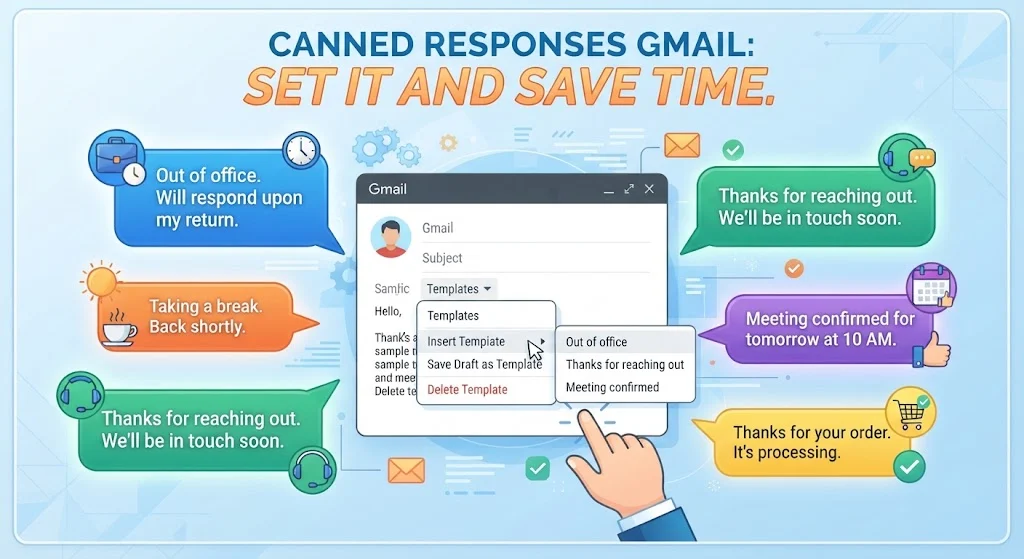
Canned responses Gmail (now officially called Templates) are pre-written messages you save and reuse with just a few clicks. Top uses: “Thanks for reaching out, I’ll respond within 24 hours,” “Here’s the information you requested,” “Meeting confirmed, see you then,” “Application received, we’ll be in touch,” and “Sorry for the delay, catching up now.”
You know that feeling when you’ve typed the same “thanks for your email, I’ll get back to you soon” message for the hundredth time? Or when you’re answering the same question from clients, coworkers, or customers over and over again? Yeah, that’s where canned responses Gmail saves your sanity.
Whether you’re running a small business, managing a team, handling customer support, or just tired of retyping the same replies, Gmail’s template feature is a total game-changer. You write a message once, save it as a template, and insert it into any email with just a few clicks. No more copy-pasting from a notes app. No more reinventing the wheel every single time.
But here’s the thing: canned responses can feel robotic if you’re not careful. The key is knowing when to use them, how to personalize them, and which tone fits the situation. The right template keeps you efficient without making people feel like they’re talking to a bot.
So here are 150+ canned responses Gmail messages for every situation, mood, and personality type.
Funny Responses
“Thanks for your email! I’m currently pretending to be organized. I’ll respond properly soon.”
Example: Perfect for a casual auto-response when you’re backlogged but want to keep it light.
Meaning: Sets a playful tone while buying yourself time to catch up.
“Auto reply: I’m currently buried under a mountain of emails. Send snacks. And patience.”
Example: Great for when your inbox is overwhelming and you need people to chill.
Meaning: Uses humor to explain a delayed response.
“Thanks for reaching out! My inbox and I are currently in couples therapy. Please allow extra time.”
Example: A funny canned response for personal or creative accounts.
Meaning: Personifies your inbox with comedic effect.
“I’ll get back to you faster than my WiFi on a good day. Which is to say, eventually.”
Example: For when you’re known for slow replies but want to keep it charming.
Meaning: A self-aware joke about response times.
“Received! I’m currently in my ‘reply later’ era. You’ll hear from me soon.”
Example: A Gen Z friendly template for casual communication.
Meaning: Uses pop culture language to set expectations.
“This is an automated response. The human is currently recharging and will respond shortly.”
Example: Perfect for vacation or sick day auto-replies.
Meaning: Frames rest as necessary maintenance.
“Thanks for your message! I’m currently doing my best impression of a functional adult. I’ll respond soon.”
Example: For when you’re overwhelmed but want to keep it relatable.
Meaning: A humorous take on being busy.
“Your email has been received and will be processed in the order it was received. The queue is long. Bring snacks.”
Example: For high-volume inboxes where you need to set expectations.
Meaning: Uses customer service language for comedic effect.
“Auto reply: I’m currently avoiding my inbox. It knows what it did.”
Example: A self-aware template for when you’re taking a break.
Meaning: Jokes about email avoidance.
“Thanks for your email! I’m currently operating at 40% brain capacity. Will respond when I hit 80%.”
Example: For when you’re tired but still want to be polite.
Meaning: A funny way to explain a delayed response.
“Message received! I’m currently prioritizing things that aren’t my inbox. Will reply when I’m done.”
Example: For anyone practicing work-life balance.
Meaning: Sets boundaries with humor.
“I’m out here living my best life. Your email is living in my inbox. We’ll meet soon.”
Example: For vacation auto-replies.
Meaning: A playful way to say you’re unavailable.
Brutal Responses
“Canned responses Gmail is set. Emailing me again won’t make me reply faster.”
Example: For serial emailers who send follow-ups every hour.
Meaning: Sets a firm boundary about response time.
“Your email has been received. It will be handled with the urgency it deserves. Eventually.”
Example: For when you want to be honest about priorities.
Meaning: A blunt but effective way to set expectations.
“This is an auto-reply. I did not read your email. I will not read it until I’m free.”
Example: For when you want zero ambiguity about your availability.
Meaning: Prevents people from expecting a faster response.
“Thanks for your message. I’m currently unavailable. That’s the update.”
Example: For a no-nonsense work environment.
Meaning: Honest and direct without over-explaining.
“I’m busy. If you need me, that’s a you problem right now.”
Example: For when you truly need to disconnect.
Meaning: Sets a clear boundary about your availability.
“Auto reply: on. My availability: off. Respect the boundary.”
Example: For when you want to be direct about your time.
Meaning: Uses the auto-reply as a boundary-setting tool.
“Your email is important to me. Just not right now. Or tomorrow. Maybe Friday.”
Example: For when you’re honest about your priorities.
Meaning: A funny but clear way to set expectations.
“Not here. Not now. Probably not tomorrow either.”
Example: For longer absences when you need to be upfront.
Meaning: Sets realistic expectations about your return.
“If it’s urgent, it’ll still be urgent when I get back. Bye.”
Example: For when you’re truly unavailable and need people to cope.
Meaning: Challenges the culture of constant urgency.
“Auto reply: because I refuse to feel guilty about taking time off.”
Example: For anyone who struggles with work boundaries.
Meaning: Frames auto-reply as a form of self-care.
“I’m out. Your email is in the queue. The queue is long. Very long.”
Example: For when you’re behind and need to warn people.
Meaning: Sets realistic expectations about response time.
“This is my out-of-office era. Please respect the journey.”
Example: For a Gen Z friendly auto-reply.
Meaning: Uses pop culture language to set boundaries.
Flirty Responses
“Out of office. But not out of your DMs if you message me elsewhere.”
Example: A playful auto-reply for personal email accounts.
Meaning: Makes it clear you’re available on other channels.
“Currently away. Missing you already. Well, missing my inbox zero at least.”
Example: For when you want to add charm to your auto-reply.
Meaning: A flirty twist on a standard auto response.
“Auto reply: because I’m busy being fabulous elsewhere.”
Example: For personal accounts when you’re on a trip.
Meaning: Keeps your auto-reply confident and playful.
“Away from email. Available for spontaneous adventures. Apply within.”
Example: A fun auto-reply for a personal or creative email.
Meaning: Opens the door for social plans while setting inbox boundaries.
“I’m out. If you’re cute, try my phone instead.”
Example: For a very casual personal account.
Meaning: Flirty and direct, with clear communication preferences.
“This auto response is the only response you’re getting. For now.”
Example: A teasing auto-reply for someone special who emails too much.
Meaning: Creates mystery while setting expectations.
“Currently unavailable. But thinking about you. Okay, thinking about lunch.”
Example: For a lighthearted personal auto-reply.
Meaning: A playful bait-and-switch that keeps it fun.
“Out of office. If this is you trying to make plans, yes.”
Example: For when you’re away but open to social invitations.
Meaning: Makes it easy for friends to reach you while you’re out.
“Auto reply: my inbox is closed but my heart is open.”
Example: A flirty auto response for personal accounts.
Meaning: Adds a romantic touch to an otherwise bland feature.
“Away right now. But I’ll be back and better than ever. Wait for me.”
Example: For when you want to build anticipation.
Meaning: A charming way to say you’re unavailable.
“If you’re emailing me, you’re doing it wrong. Text me.”
Example: For a personal auto-reply when you prefer texting.
Meaning: Flirty and direct about your communication preferences.
“Out. But not down to ignore you forever. Just until Monday.”
Example: For when you want to reassure someone you’ll respond.
Meaning: Balances unavailability with genuine interest.
Polite Responses
“Thank you for your email. I am currently out of the office and will respond when I return.”
Example: Standard professional auto-reply for a work account.
Meaning: Sets clear expectations without being rude.
“I appreciate your message. I’m away from my desk right now and will get back to you soon.”
Example: For when you want to be warm but professional.
Meaning: Acknowledges receipt while communicating a delay.
“Thank you for reaching out. I’m currently unavailable and will respond as soon as possible.”
Example: For a general professional setting.
Meaning: A courteous and simple auto-reply.
“Your email has been received. I’m out of the office and will reply upon my return.”
Example: For a formal workplace environment.
Meaning: Confirms receipt and sets expectations.
“Thanks for your message. I’m away from email right now. For urgent matters, please contact the team.”
Example: When you want to redirect urgent issues.
Meaning: Provides an alternative while maintaining professionalism.
“I’m currently out of the office. I’ll respond to your email when I’m back. Thank you for your patience.”
Example: For any professional auto response.
Meaning: A polite way to ask for patience without over-explaining.
“Thank you for your email. I’ll be back in the office shortly and will respond then.”
Example: For short absences like a long weekend.
Meaning: Keeps it brief and professional.
“I’m away from my inbox at the moment. I’ll get back to you as soon as I can.”
Example: For a friendly but professional tone.
Meaning: A simple, honest auto-reply.
“Thank you for your patience. I’m currently unavailable and will follow up when I return.”
Example: For when you want to show appreciation upfront.
Meaning: A gracious way to set a response delay.
“Your message is important to me. I’m out right now but will reply when I’m back.”
Example: For client-facing roles where relationships matter.
Meaning: Reassures the sender while being honest about timing.
“I’m currently away. For anything urgent, please reach out to my colleague. Otherwise, I’ll respond on my return.”
Example: Standard business auto-reply with a redirect.
Meaning: Covers all bases professionally.
“Thanks for your email. I’ll be slow to respond this week but will catch up as soon as I can.”
Example: For busy periods rather than full absences.
Meaning: Honest about response times without a hard out-of-office.
Professional Responses
“Thank you for your email. I am currently out of the office and will return on [date]. For urgent matters, please contact [name] at [email].”
Example: Standard corporate auto-reply template.
Meaning: Provides all essential information in a formal tone.
“I am out of the office until [date]. I will have limited access to email and will respond upon my return.”
Example: For when you might check email sporadically.
Meaning: Sets realistic expectations about availability.
“Thank you for contacting me. I am away from the office and will respond to your message when I return on [date].”
Example: For client or vendor communication.
Meaning: Professional and clear without being cold.
“I will be out of the office from [start date] to [end date]. Please direct urgent inquiries to [contact].”
Example: For planned vacations or leave.
Meaning: Provides specific dates and a backup contact.
“Thank you for your message. I am currently out of the office. For immediate assistance, please contact [name].”
Example: For roles where quick response matters.
Meaning: Ensures no one is left waiting for something urgent.
“I am currently away from my desk. I will respond to your email as soon as I return to the office.”
Example: For shorter absences.
Meaning: Simple, professional, and effective.
“Thank you for reaching out. I am out of the office and will have limited email access until [date].”
Example: For business trips or conferences.
Meaning: Communicates partial availability.
“I am away from the office and will respond to your email upon my return. Thank you for your understanding.”
Example: For general professional use.
Meaning: Polite and straightforward.
“Your email has been received. I am out of the office until [date]. Please contact [name] for urgent matters.”
Example: For standard corporate settings.
Meaning: Confirms receipt and provides an alternative.
“Thank you for your email. I am currently unavailable and will reply at my earliest opportunity.”
Example: For when you’re unsure of your return timeline.
Meaning: Keeps it flexible while remaining professional.
“I am out of the office. For assistance in my absence, please reach out to [name] at [email].”
Example: For team-based work environments.
Meaning: Delegates responsibility clearly.
“Thank you for your patience. I am currently out of the office and will respond as soon as I am able.”
Example: For high-volume inboxes during absences.
Meaning: Appreciates the sender while setting expectations.
Creative Responses
“Canned responses Gmail: where emails go to wait patiently until I return.”
Example: For a personal or creative work account.
Meaning: Personifies your inbox with a fun twist.
“Your email is now in the queue. The queue is on vacation. So am I.”
Example: A clever way to describe a delayed response.
Meaning: Uses queue language to set expectations humorously.
“I’m out here living my best life. Your email is living in my inbox. We’ll meet soon.”
Example: For a vacation auto-reply.
Meaning: A creative way to say you’re unavailable but will respond eventually.
“This is an automated message. The human behind it is currently recharging.”
Example: For tech-savvy or startup environments.
Meaning: Frames rest as necessary maintenance.
“I’ve stepped away from my inbox. If you need me, try carrier pigeon.”
Example: A quirky auto-reply for a fun workplace.
Meaning: Humorously suggests you’re completely unreachable.
“Auto reply: my inbox and I are on a break. It’s not you, it’s me.”
Example: For a personal email account.
Meaning: Uses relationship language for comedic effect.
“Currently off the grid. Well, off the inbox. Same energy.”
Example: For a casual auto response.
Meaning: A modern way to say you’re unavailable.
“Your message has been placed in a time capsule. It will be opened when I return.”
Example: A creative auto-reply for someone who loves whimsy.
Meaning: Makes waiting for a response feel less annoying.
“I’m away. This auto reply is my digital out-of-office sign. Please admire it.”
Example: For when you want your auto-reply to have personality.
Meaning: Draws attention to the auto-reply itself.
“Canned responses Gmail: the only time it’s acceptable to ghost your inbox.”
Example: For a lighthearted personal or creative account.
Meaning: Normalizes not checking email while away.
“I’ve temporarily ghosted my inbox. It deserved a break too.”
Example: A fun way to announce your absence.
Meaning: Frames email avoidance as a mutual rest.
“This inbox is currently closed for maintenance. Please check back later.”
Example: For when you’re overwhelmed and need a pause.
Meaning: Borrows business language for personal boundaries.
Sarcastic Responses
“Oh, you emailed me? That’s sweet. I’m not here though. Try again Monday.”
Example: For when you want to be playful but firm.
Meaning: Acknowledges the email while making it clear you won’t respond.
“Auto reply: because apparently I need to announce when I’m not working.”
Example: For someone tired of the always-on work culture.
Meaning: Pokes fun at the expectation of constant availability.
“I’m out of office. Shocking, I know. Please contain your surprise.”
Example: A dry auto-reply for a workplace with a sense of humor.
Meaning: Uses sarcasm to make a standard message more fun.
“You’ve reached my inbox. It’s on strike. So am I.”
Example: For when you’re taking a well-deserved break.
Meaning: Frames absence as a collective decision with your inbox.
“I’m away. Your email will be handled with the urgency it deserves. Eventually.”
Example: For when you want to set expectations with a wink.
Meaning: Playfully commits to responding without promising speed.
“Auto reply: because ‘I’m not checking email’ apparently needs a formal announcement.”
Example: For anyone who finds auto-replies slightly absurd.
Meaning: Self-aware humor about the feature itself.
“I’m out. Please don’t take it personally. Actually, do. I’m not here.”
Example: A sarcastic auto-reply for a close team.
Meaning: Jokes about the limitations of auto-replies.
“This is an automated response. The human is currently unavailable. Lucky human.”
Example: For when you’re jealous of your own time off.
Meaning: A sarcastic celebration of being away from work.
“Auto reply: I’m away. Your patience is appreciated and also required.”
Example: For a workplace where urgency is overused.
Meaning: Sets boundaries with a hint of sarcasm.
“I’ll be back when I’m back. That’s the update.”
Example: For a no-frills, slightly sarcastic auto-reply.
Meaning: Refuses to over-explain your absence.
“Your email is important to me. Just not today. Or tomorrow. Maybe Friday.”
Example: For when you’re honest about your priorities.
Meaning: A funny but clear way to set expectations.
“Canned responses Gmail: so people know I’m ignoring them professionally.”
Example: For a team that appreciates dry humor.
Meaning: Acknowledges the professional version of ghosting.
Cute Responses
“I’m away from my inbox right now. Be back soon. Miss you already.”
Example: For a personal or friendly work email.
Meaning: Adds warmth to a standard auto-reply.
“Thank you for your email. I’m taking a little break and will reply with fresh energy soon.”
Example: For when you want to be kind about your absence.
Meaning: Frames rest as a positive thing for everyone.
“Your message made it to my inbox. I’ll be there soon to give it the attention it deserves.”
Example: For personal accounts or small businesses.
Meaning: A sweet way to acknowledge receipt without rushing.
“I’m out. But not gone forever. Just recharging. Talk soon.”
Example: For a friendly auto-reply that feels personal.
Meaning: Reassures the sender while being honest about your absence.
“Currently away. Thinking of you. Okay, thinking of coffee. But you too.”
Example: For a lighthearted personal auto-reply.
Meaning: A cute and playful way to set expectations.
“Thank you for reaching out. I’m away right now but will reply as soon as I’m back.”
Example: For any professional or personal account.
Meaning: Simple, sweet, and effective.
“I’m taking some time off. Your email will be waiting for me when I return, and I’ll be happy to reply.”
Example: For when you want to be extra gracious.
Meaning: Frames your absence and return positively.
“Away from my inbox. But you’re on my mind. Sort of.”
Example: For personal or casual work emails.
Meaning: A cute, teasing auto-reply.
“Your email is safe with me. I’ll respond when I’m back and recharged.”
Example: For when you want to reassure the sender.
Meaning: A gentle way to set a response delay.
“I’m out enjoying some offline time. I’ll be back soon. Take care until then.”
Example: For a warm, friendly auto-reply.
Meaning: Prioritizes well-being while being considerate.
“Thank you for your message. I’m away but will reply with a smile when I’m back.”
Example: For a personal or creative account.
Meaning: Keeps the tone light and kind.
“Taking a little break. Your email will get my full attention when I return.”
Example: For anyone who wants to sound thoughtful.
Meaning: Promises quality attention rather than a rushed reply.
Dramatic Responses
“I have left the building. The inbox is dark. The auto reply is my only voice.”
Example: For when you want your auto-reply to be memorable.
Meaning: Adds theatrical flair to a standard message.
“Canned responses Gmail activated. The human is gone. Long live the human.”
Example: For a workplace with a sense of drama.
Meaning: Playfully announces your temporary absence.
“I am unreachable. Not even I can reach me right now.”
Example: For a dramatic personal auto-reply.
Meaning: Emphasizes complete unavailability with humor.
“This is my out-of-office era. Please respect the journey.”
Example: For a Gen Z friendly auto-reply.
Meaning: Uses pop culture language to set boundaries.
“I’m gone. If you need me, you’ll have to wait. Like a season finale.”
Example: For when you want to build suspense.
Meaning: A dramatic way to say you’ll be back soon.
“The inbox is closed. The auto reply is speaking. That is all.”
Example: For anyone who wants a dramatic but concise auto-reply.
Meaning: Uses formal language for comedic effect.
“I’ve vanished. Don’t look for me. I’m probably eating something delicious.”
Example: For a personal vacation auto-reply.
Meaning: Dramatic but relatable.
“Auto reply: because my absence deserves an announcement.”
Example: For when you want to be a little extra.
Meaning: Celebrates your time off with flair.
“I’m out. The inbox will survive without me. Probably.”
Example: For a dramatic but self-aware auto-reply.
Meaning: Jokes about your own importance.
“Gone. Not forgotten. Back soon. The inbox will tell you when.”
Example: For a poetic auto-reply.
Meaning: Rhythmic and memorable.
“I’ve stepped into the void. Please leave a message. The void will check it later.”
Example: For a funny, dramatic auto-reply.
Meaning: Personifies your absence with humor.
“This auto reply is my last will and testament. I bequeath my inbox to you.”
Example: For a very dramatic workplace.
Meaning: Takes auto-reply to theatrical extremes.
Chill and Casual Responses
“Hey, I’m out right now. I’ll get back to you when I’m back.”
Example: For a casual personal or work account.
Meaning: Simple, relaxed, and to the point.
“Not at my desk. Will reply soon. Thanks for your patience.”
Example: For a quick and easy auto-reply.
Meaning: Keeps it brief and friendly.
“Away from email. Back later. That’s the update.”
Example: For when you don’t want to over-explain.
Meaning: A no-frills auto-reply that gets the job done.
“I’m out. Your email will be here when I get back. So will I.”
Example: For a laid-back workplace.
Meaning: A casual way to say you’ll respond eventually.
“Taking a break from the inbox. Catch you on the flip side.”
Example: For a friendly, casual auto-reply.
Meaning: Uses casual language to set expectations.
“Currently offline. I’ll reply when I’m back online.”
Example: For a simple auto response.
Meaning: Clear and easy to understand.
“I’m away. Nothing urgent is happening. Probably.”
Example: For a chill auto-reply.
Meaning: A relaxed way to say you’re unavailable.
“Out for now. Back soon. Don’t miss me too much.”
Example: For personal or casual work emails.
Meaning: Lighthearted and friendly.
“Away from my inbox. Will respond when I’m not.”
Example: For a minimal auto-reply.
Meaning: Gets the point across with zero fluff.
“I’m out. Emails can wait. So can most things, honestly.”
Example: For when you’re prioritizing rest.
Meaning: A chill reminder that not everything is urgent.
“Not checking email right now. I’ll catch up when I’m back.”
Example: For a straightforward auto-reply.
Meaning: Honest and simple.
“Out of office. In relaxation mode. Back soon.”
Example: For a vacation auto-reply.
Meaning: Short, sweet, and clear.
Confident Responses
“Canned responses Gmail is set. I’ll respond when I’m ready.”
Example: For when you want to own your time off.
Meaning: A confident boundary about your availability.
“I’m out. Your email will be answered when I return. Not before.”
Example: For anyone who needs clear expectations.
Meaning: Firm and unapologetic about response time.
“I’m away. The inbox can wait. So can you.”
Example: For when you’re prioritizing your break.
Meaning: A bold auto-reply that sets boundaries.
“I’ve set my auto reply. That means I’m not available. Respect it.”
Example: For when you need people to take your absence seriously.
Meaning: Direct and confident.
“I’m not checking email. This is not a negotiation.”
Example: For a very direct auto-reply.
Meaning: Shuts down any expectation of a quick response.
“I’m out. My inbox is not my priority right now. I am.”
Example: For anyone practicing work-life balance.
Meaning: Frames self-care as the priority.
“Auto reply: because I’m unavailable and that’s final.”
Example: For a confident, no-nonsense auto response.
Meaning: Removes any ambiguity about your absence.
“I’m away. I’ll reply when I’m back. That’s all you need to know.”
Example: For a concise, confident auto-reply.
Meaning: Keeps it simple and firm.
“Your email is received. I’m unavailable. I’ll respond on my return.”
Example: For a professional but confident tone.
Meaning: Confirms receipt while holding the boundary.
“I’m out. The inbox will survive. So will you.”
Example: For a confident auto-reply with humor.
Meaning: Reassures without over-explaining.
“Canned responses Gmail: my time off is non-negotiable.”
Example: For anyone who struggles with disconnecting.
Meaning: Reinforces the importance of rest.
“I’m away. I’ll respond when I’m back. No need to follow up.”
Example: For serial follow-uppers.
Meaning: Preemptively sets expectations to reduce repeat emails.
Emotional Responses
“Thank you for your email. I’m taking some time to rest and will respond when I can.”
Example: For when you’re prioritizing mental health.
Meaning: Honest and vulnerable about needing a break.
“I’m away right now. I appreciate your patience and understanding.”
Example: For a kind but emotional auto-reply.
Meaning: Expresses gratitude while setting a boundary.
“I’m out of the office and taking things one day at a time. I’ll reply when I’m able.”
Example: For when you’re dealing with something personal.
Meaning: Shares a gentle truth without oversharing.
“Thank you for reaching out. I’m currently unavailable and will respond as soon as I can.”
Example: For any emotional or difficult period.
Meaning: Keeps it professional while being honest about timing.
“I’m taking a break. Your email matters and I’ll give it my full attention when I return.”
Example: For when you want to reassure while being away.
Meaning: Balances honesty with care for the sender.
“I’m away from my inbox. Thank you for your understanding during this time.”
Example: For personal leave or difficult circumstances.
Meaning: A gracious way to set expectations.
“Your email has been received. I’m out right now but will reply when I’m back.”
Example: For when you need a simple, kind auto response.
Meaning: Confirms receipt without over-explaining.
“I’m currently unavailable. Thank you for your patience. I’ll respond soon.”
Example: For when you’re overwhelmed and need space.
Meaning: A gentle way to ask for understanding.
“I’m out. I’ll get back to you when I’m in a better place to respond.”
Example: For when you’re prioritizing your well-being.
Meaning: Honest about needing time to recharge.
“Thank you for your email. I’m taking care of myself right now and will reply when I can.”
Example: For mental health days or personal leave.
Meaning: Frames self-care as a valid reason for delay.
“I’m away. I appreciate you and will respond when I’m back.”
Example: For a warm, emotional auto-reply.
Meaning: Shows care for the sender while maintaining boundaries.
“I’m out for now. I’ll be back. Thank you for waiting.”
Example: For when you want to be honest and hopeful.
Meaning: Acknowledges the delay with kindness.
Sweet Responses
“Thank you for your email. I’m away right now but will reply as soon as I’m back.”
Example: For a warm, friendly auto response.
Meaning: Simple, kind, and reassuring.
“Your message made it safely to my inbox. I’ll respond with care when I return.”
Example: For personal or small business emails.
Meaning: A sweet acknowledgment that feels personal.
“I’m out. Your email will be waiting for me when I get back. So will my coffee.”
Example: For a lighthearted but sweet auto-reply.
Meaning: Adds warmth with a touch of humor.
“Thank you for reaching out. I’m taking a break and will reply when I’m recharged.”
Example: For when you want to be kind about your absence.
Meaning: Frames rest as necessary for quality responses.
“I’m away from my inbox. I’ll be back soon and happy to help.”
Example: For any professional or personal account.
Meaning: Reassures the sender with a friendly tone.
“Your email is important to me. I’m out right now but will respond soon.”
Example: For when you want to show you care.
Meaning: Prioritizes the sender while being honest about timing.
“I’m taking some time off. I’ll reply when I’m back and feeling refreshed.”
Example: For a sweet, honest auto-reply.
Meaning: Shares your intention to return with energy.
“Thank you for your patience. I’m away but will get back to you as soon as I can.”
Example: For a warm auto response.
Meaning: Appreciates the sender and sets expectations gently.
“I’m out. But I’ll be back with a smile and a reply.”
Example: For a cute, personal auto-reply.
Meaning: Keeps the tone positive and warm.
“Your message is safe with me. I’ll respond when I’m back and recharged.”
Example: For anyone who wants to sound caring.
Meaning: A sweet way to acknowledge without rushing.
“I’m away right now. Thank you for your understanding and patience.”
Example: For personal or professional use.
Meaning: A simple, gracious auto-reply.
“I’ll be back soon. Until then, take care and thanks for your email.”
Example: For a sweet, friendly auto response.
Meaning: Ends with warmth and well-wishes.
Clever Responses
“Canned responses Gmail: the art of saying ‘not now’ professionally.”
Example: For anyone who appreciates wit.
Meaning: Frames canned responses as a communication skill.
“Your email has been received. My attention has not. Yet.”
Example: For a clever, concise auto-reply.
Meaning: Acknowledges receipt while setting expectations.
“I’m out. The inbox is on pause. You know what to do.”
Example: For when you want your auto-reply to be memorable.
Meaning: Trusts the sender to understand without over-explaining.
“This is an automated response. The human is currently buffering.”
Example: For tech-savvy workplaces.
Meaning: Uses streaming language for comedic effect.
“Auto reply: because ‘I’m not here’ needed a formal announcement.”
Example: For a self-aware auto response.
Meaning: Pokes fun at the auto-reply feature itself.
“Your email is in good hands. Mine. When I get back.”
Example: For a clever but reassuring auto-reply.
Meaning: Confirms receipt while promising a future response.
“I’m away. Your email will be processed in the order it was received. Eventually.”
Example: For when you want to be clever about delays.
Meaning: Uses customer service language for humor.
“Canned responses Gmail: because silence isn’t always golden in email.”
Example: For a witty auto-reply.
Meaning: Justifies the auto-reply with a twist on a classic saying.
“I’m out. The inbox is closed. The auto reply is doing its job.”
Example: For when you want to highlight the feature itself.
Meaning: A meta auto-reply that’s clever and clear.
“Your message is queued. The queue is long. The queue is me.”
Example: For a clever, concise auto-reply.
Meaning: Personifies your inbox with humor.
“I’m away. Please enjoy this auto reply in my absence.”
Example: For a clever and polite auto response.
Meaning: Treats the auto-reply like a gift.
“Canned responses Gmail: the professional way to say ‘talk to you later.'”
Example: For a witty, simple auto-reply.
Meaning: Reframes the feature as a friendly gesture.
FAQs
What Are Canned Responses in Gmail?
Canned responses Gmail (now officially called Templates) are pre-written messages you save and reuse in future emails. You can include text, images, links, and formatting. They’re perfect for answering frequently asked questions, sending standard replies, or including a signature you use occasionally. Google renamed the feature from “Canned Responses” to “Templates” in 2018, but most people still call them canned responses.
How Do I Enable Canned Responses in Gmail?
Open Gmail on a computer, click the gear icon, select See all settings, go to the Advanced tab, find Templates and select Enable, then click Save Changes. Once enabled, you can create and insert templates from the three-dot menu in any compose window. Note that this feature only works on desktop, not on mobile apps.
Can I Use Canned Responses for Automatic Replies?
Yes. You can create a filter that automatically sends a canned response when certain conditions are met. Go to Settings, Filters and Blocked Addresses, create a new filter, and in the Actions section select Send canned response and choose your template. This is perfect for auto-responding to specific senders or keywords.
What’s the Difference Between Canned Responses and Templates?
Nothing. They’re the same feature. Google renamed Canned Responses to Templates in 2018. If you’re looking for Canned Responses in your settings and can’t find it, look for Templates instead. Your saved responses are still there, just under the new name.
Where Are Canned Responses Stored in Gmail?
Canned responses are stored as drafts in your Gmail account. If you select and delete all your drafts, you might accidentally delete your canned responses too. Don’t worry though, you can restore them within 30 days by looking in your trash. It’s a good idea to email yourself a backup copy of important templates just in case.
Can I Use Canned Responses on Gmail Mobile?
Gmail’s native Templates feature doesn’t work on the Gmail mobile apps. It only works on the desktop web version. If you need templates on mobile, you’ll need to use a third-party keyboard or extension, or use a workaround like saving them in Google Keep or a notes app.
How Many Canned Responses Can I Save in Gmail?
Gmail allows up to 50 templates per account. If you’ve hit the limit, you’ll need to delete some unused templates to make room for new ones. Organizing your templates with clear names and prefixes can help you manage them more efficiently.
Conclusion
Canned responses Gmail doesn’t have to be boring or robotic. Whether you’re managing a business, handling customer support, or just tired of typing the same replies over and over, the right template saves you time without sacrificing personality. It can be professional, funny, sweet, or clever. It can even make someone smile while they wait for your response.
The key is knowing your audience and choosing a tone that fits the situation. Save this list for your next busy period, share it with a coworker who always forgets to use templates, and don’t be afraid to get creative. Your inbox will thank you, and so will your sanity. Now go set up those canned responses and reclaim your time.
Read More Related Articles :
- 150+ Best Responses To Security Detection And Response That Actually Convert In 2026
- 150+ Best Responses To Network Detection Response That Actually Convert In 2026
- 150+ Best Responses To Security Incident Response AI Agent That Actually Convert In 2026

Sarah Mitchell is a blogger and writer at RespondLabs.com, turning everyday ideas into clear, engaging stories.
She enjoys exploring fresh perspectives and creating content that keeps readers curious and informed.