Quick Answer
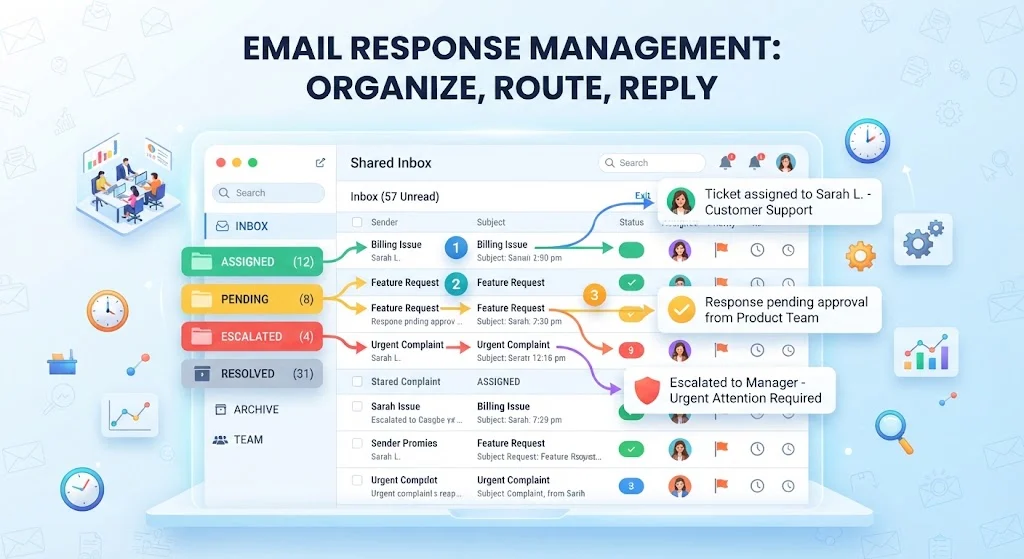
Email response management is how you organize, route, and track every reply your team sends so nothing gets lost. Top approaches: “Assign every thread an owner,” “Set first response time targets,” “Use shared inboxes not personal ones,” “Auto-acknowledge but never auto-close,” and “Escalate before customers chase.”
You know that sinking feeling when a customer emails for the third time asking “did anyone see my message?” Or when you realize an important client email has been sitting in someone’s personal inbox for four days because nobody knew whose job it was? Yeah, we’ve all been there.
Whether you’re running a small business, managing a support team, or just trying to keep your shared inbox from becoming a graveyard, email response management is the difference between looking professional and looking like you disappeared. It’s not just about replying fast. It’s about making sure the right person replies, at the right time, with the right information, every single time.
But here’s the thing: most teams treat email like a personal to-do list instead of a shared workflow. That’s where things fall apart. The right email response management system keeps you organized, keeps customers happy, and keeps your team from wanting to throw their laptops out the window.
So here are 150+ email response management messages, rules, and replies for every situation, mood, and personality type.
Funny Responses
“Your email has been received and assigned to a human. A real one. We promise.”
Example: Perfect auto-acknowledgment when customers worry they’re talking to a bot.
Meaning: Reassures the sender that a real person will handle their issue.
“Thanks for your email! It’s currently in our queue, somewhere between ‘urgent’ and ‘we’ll get to it.'”
Example: Great for teams with a backlog who want to keep it light.
Meaning: Sets expectations with humor while acknowledging the delay.
“We’ve received your message. Our team is currently fighting over who gets to reply first.”
Example: Fun auto-reply for small teams with high email volume.
Meaning: Adds personality while confirming receipt.
“Your email is important to us. It’s also one of 847 others. We’re getting there.”
Example: Honest auto-reply for busy periods when you can’t hide the volume.
Meaning: Transparency with a touch of humor builds trust.
“Auto-acknowledgment: we saw your email. We’re not ignoring you. We’re just slow. There’s a difference.”
Example: For teams that want to be upfront about response times.
Meaning: Distinguishes between ignoring and being backlogged.
“Thanks for reaching out! Our response time is currently somewhere between ‘now’ and ‘eventually.'”
Example: A playful way to set expectations without over-promising.
Meaning: Keeps the tone light while being honest about timing.
“Your message has been received. Our team is currently caffeinating and will respond shortly.”
Example: For casual or creative teams where personality matters.
Meaning: Humanizes the response process with humor.
“We got your email! It’s in the queue. The queue is long. Bring snacks.”
Example: A funny way to acknowledge high-volume periods.
Meaning: Sets realistic expectations while making people smile.
“Your email has been assigned to a team member. They’re currently pretending to be productive.”
Example: For internal teams who appreciate dry humor.
Meaning: Adds levity to a routine process.
“Thanks for your patience! We’re moving as fast as our WiFi allows.”
Example: For when technical issues or slow systems are affecting response times.
Meaning: Blames the tools, not the team, with a wink.
“Received! Our team is on it. Well, they will be. Right after this meeting.”
Example: For teams stuck in back-to-back meetings.
Meaning: Honest about delays without being negative.
“Your email is safe with us. We’ll respond faster than your ex texted back. Probably.”
Example: For brands with a cheeky, youthful voice.
Meaning: Uses relatability to make waiting feel less annoying.
Brutal Responses
“Email response management rule one: if you email twice in an hour, you go to the back of the queue.”
Example: For teams dealing with impatient follow-up senders.
Meaning: Sets a firm boundary about follow-up behavior.
“Your email has been received. Following up again won’t make us faster. It just makes us tired.”
Example: For high-volume inboxes where repeat emails slow everything down.
Meaning: Politely but firmly discourages excessive follow-ups.
“We respond to every email once. Sending five more won’t speed things up.”
Example: For support teams drowning in duplicates.
Meaning: Clarifies that follow-ups don’t bump priority.
“This is an auto-acknowledgment. It does not mean we’ve read your email. It means we’ve seen the subject line.”
Example: For teams that want to be transparent about their process.
Meaning: Removes ambiguity about what “received” actually means.
“First response time is our metric. Not your patience. Please respect the workflow.”
Example: For internal teams who need to manage stakeholder expectations.
Meaning: Reinforces that the system exists for a reason.
“Your email is in the queue. The queue does not care about your deadline.”
Example: For teams dealing with constant urgency requests.
Meaning: Sets a boundary about what qualifies as urgent.
“We’ve received your email. No need to send another one. Or three. Or five.”
Example: For serial follow-uppers who clog the inbox.
Meaning: Firmly but politely asks for patience.
“Email response management means we answer in order. Not in order of who shouts loudest.”
Example: For teams committed to fair, structured workflows.
Meaning: Reinforces that everyone gets treated equally.
“Your message is important. But so are the 200 before yours. Please wait your turn.”
Example: For support teams with clear queue systems.
Meaning: Sets realistic expectations about response order.
“Following up three times doesn’t make it urgent. It just makes it annoying.”
Example: For teams with clear SLA definitions.
Meaning: Reminds senders that urgency is defined by the issue, not the volume.
“We’ve seen your email. We’ve also seen your four follow-ups. We’re still working through the first one.”
Example: For support inboxes overwhelmed by duplicates.
Meaning: Honest and direct about how the queue actually works.
“Auto-acknowledgment: received. Auto-closing: never. We actually reply to people here.”
Example: For brands that want to differentiate from faceless competitors.
Meaning: Emphasizes that real humans handle every message.
Flirty Responses
“Your email caught our attention. We’ll respond soon. Consider this our first date.”
Example: For playful brands with a flirty, youthful tone.
Meaning: Adds charm to a standard acknowledgment.
“Thanks for reaching out! We’re playing hard to get with our response time.”
Example: For brands that want to keep things light and teasing.
Meaning: Makes waiting feel playful rather than frustrating.
“Your message made it to our inbox. We’re already planning our reply.”
Example: For teams that want to sound eager and attentive.
Meaning: Makes the sender feel valued and prioritized.
“We saw your email and immediately added it to our priority list. Don’t tell the others.”
Example: For VIP customers or high-value leads.
Meaning: Makes the recipient feel special.
“Your email is in good hands. Ours. We’ll be in touch soon.”
Example: For personal-feeling auto-replies from small teams.
Meaning: Adds warmth to a routine process.
“Thanks for your message! We’re currently swooning over how well you write emails.”
Example: For playful, personality-driven brands.
Meaning: Uses flattery to make waiting more pleasant.
“Your email has been received. We’re already drafting a reply that we hope impresses you.”
Example: For sales or customer success teams building relationships.
Meaning: Shows care and attention to the sender.
“We got your message and we’re already thinking about you. Professionally, of course.”
Example: For brands with a cheeky, human voice.
Meaning: Adds charm without crossing professional lines.
“Your email is the highlight of our inbox today. We’ll reply soon.”
Example: For small teams who want to make customers feel seen.
Meaning: Boosts the sender’s mood while setting expectations.
“Thanks for reaching out! We’re currently arguing over who gets to reply because you seem cool.”
Example: For playful teams with a sense of humor.
Meaning: Makes the sender feel appreciated.
“Your message has been received and assigned to someone who’s already a fan.”
Example: For community-driven brands.
Meaning: Personalizes the response process.
“We’re on it. And by ‘on it,’ we mean we’re crafting a reply worthy of your patience.”
Example: For brands that want to sound thoughtful rather than rushed.
Meaning: Sets expectations while showing care.
Polite Responses
“Thank you for your email. We have received it and will respond as soon as possible.”
Example: Standard professional auto-acknowledgment.
Meaning: Confirms receipt without over-promising.
“We appreciate you reaching out. Our team will review your message and get back to you shortly.”
Example: For general business correspondence.
Meaning: Sets a polite, professional tone.
“Thank you for contacting us. Your message has been assigned to the appropriate team member.”
Example: For teams with clear routing processes.
Meaning: Reassures the sender that their email reached the right person.
“We have received your email and will respond within [timeframe]. Thank you for your patience.”
Example: For teams with defined first response time targets.
Meaning: Sets clear expectations about response speed.
“Thank you for your message. For urgent matters, please call [number]. Otherwise, we will respond soon.”
Example: For businesses that need to redirect urgent issues.
Meaning: Provides an alternative while maintaining professionalism.
“Your email has been received. We will review it and respond during business hours.”
Example: For teams that don’t monitor email 24/7.
Meaning: Sets realistic expectations about working hours.
“Thank you for reaching out. We have noted your request and will follow up shortly.”
Example: For service-based businesses acknowledging inquiries.
Meaning: Confirms action without giving a specific timeline.
“We appreciate your email and will get back to you as soon as we can.”
Example: For any professional setting.
Meaning: Simple, honest, and polite.
“Thank you for your patience. We are currently experiencing high volume and will respond as quickly as possible.”
Example: For busy periods when response times are slower than usual.
Meaning: Acknowledges delays while asking for understanding.
“Your message is important to us. We will respond as soon as a team member is available.”
Example: For support teams with limited staff.
Meaning: Reassures while being honest about availability.
“Thank you for contacting us. We have logged your request and will be in touch.”
Example: For ticketed support systems.
Meaning: Confirms that the request is officially tracked.
“We have received your email and will respond in the order it was received. Thank you for understanding.”
Example: For teams with fair queue systems.
Meaning: Explains the process transparently.
Professional Responses
“Thank you for your email. Your request has been logged and assigned ticket number [number]. We will respond within [timeframe].”
Example: Standard corporate email response management protocol.
Meaning: Provides tracking information and clear expectations.
“We acknowledge receipt of your email. A team member will review and respond within [X] business hours.”
Example: For formal business environments.
Meaning: Sets a specific, professional timeline.
“Thank you for contacting [company name]. Your inquiry has been routed to the appropriate department.”
Example: For larger organizations with multiple teams.
Meaning: Shows that the email is being handled by the right people.
“Your email has been received. Please note our business hours are [hours]. We will respond during the next business day.”
Example: For businesses with defined operating hours.
Meaning: Manages expectations about after-hours emails.
“We have received your message. For immediate assistance, please contact [name] at [email/phone].”
Example: For teams that want to provide an escalation path.
Meaning: Offers a faster alternative while keeping the inbox organized.
“Thank you for your email. We are currently experiencing higher than usual volume and appreciate your patience.”
Example: For peak periods or staffing shortages.
Meaning: Transparent about delays without making excuses.
“Your request has been received and assigned to [team/individual]. They will respond within [timeframe].”
Example: For teams with clear ownership models.
Meaning: Shows that every email has a responsible owner.
“Thank you for reaching out. We have noted your request and will follow up with a detailed response shortly.”
Example: For complex inquiries that require research.
Meaning: Confirms action while promising a thorough reply.
“We acknowledge your email. Please allow [timeframe] for a response. For urgent matters, call [number].”
Example: For professional services firms.
Meaning: Sets boundaries while providing an urgent path.
“Thank you for contacting us. Your email has been received and will be handled by our [department] team.”
Example: For organizations with specialized departments.
Meaning: Reassures the sender that the right experts are involved.
“We have received your message and will respond within one business day. Thank you for your patience.”
Example: For standard business communication.
Meaning: Sets a clear, reasonable expectation.
“Your email has been received. We will review your request and respond with next steps shortly.”
Example: For teams that need to assess before responding fully.
Meaning: Manages expectations while promising action.
Creative Responses
“Email response management: where messages go to be organized, prioritized, and eventually answered.”
Example: For teams that want to explain their process with personality.
Meaning: Personifies the workflow in a relatable way.
“Your email is now in the queue. The queue is organized.
Example: For support teams with a sense of humor.
Meaning: Explains the system while keeping it light.
“We’ve received your message. It’s currently being sorted by our highly trained email ninjas.”
Example: For playful brands with a creative voice.
Meaning: Adds character to a standard acknowledgment.
“Your email has been placed in the priority pipeline. Please stand by for human contact.”
Example: For tech-savvy teams.
Meaning: Uses tech language to set expectations.
“Auto-acknowledgment: your message is safe. It’s in our system. It will be handled by a real person.”
Example: For brands that want to differentiate from faceless competitors.
Meaning: Reassures while emphasizing the human element.
“Email response management is like a relay race. Your email is the baton. We’re running.”
Example: For teams that want to explain their workflow creatively.
Meaning: Uses a metaphor to make the process understandable.
“Your message has been received. It’s now in the capable hands of our response team. They’re very capable.”
Example: For playful, confident brands.
Meaning: Builds trust with a touch of humor.
“We’ve got your email. It’s in the queue. The queue is our happy place.”
Example: For teams that genuinely enjoy organization.
Meaning: Makes the process sound positive and intentional.
“Your email has been routed, tagged, and assigned. Our system is beautiful. You’d love it.”
Example: For teams proud of their workflow.
Meaning: Shows off the process while reassuring the sender.
“Message received. Now entering the response vortex. Estimated exit time: soon.”
Example: For creative teams with a sci-fi sense of humor.
Meaning: Sets expectations with playful imagery.
“Your email is in our system. Our system is in our control. Everything is fine.”
Example: For teams that want to sound reassuring and slightly funny.
Meaning: Calms the sender while showing confidence.
“Auto-reply: we’ve captured your email. It’s now part of our carefully curated inbox collection.”
Example: For brands with a quirky voice.
Meaning: Makes the process sound intentional rather than chaotic.
Sarcastic Responses
“Oh, you emailed us? We hadn’t noticed. Just kidding. We noticed. We’re on it.”
Example: For teams that want to be playful but responsive.
Meaning: Acknowledges the email with dry humor.
“Email response management: because apparently ‘we’ll get to it when we get to it’ isn’t a strategy.”
Example: For teams that have learned the hard way.
Meaning: Pokes fun at the chaos that comes without a system.
“We’ve received your email. Shocking, I know. We’re very professional here.”
Example: For brands with a self-aware sense of humor.
Meaning: Uses sarcasm to make a standard message memorable.
“Your email is in the queue. The queue is long. The queue is always long. Welcome.”
Example: For support teams that want to be honest with a twist.
Meaning: Acknowledges the backlog without being negative.
“Auto-acknowledgment: received. Human response: pending. Human: currently hiding from inbox.”
Example: For teams that relate to inbox overwhelm.
Meaning: Uses humor to humanize the response delay.
“We’ve seen your email. We’ve also seen the 50 others. We’re prioritizing. Sort of.”
Example: For teams that want to be honest about volume.
Meaning: Sets expectations while keeping it light.
“Your email is important to us. Not as important as lunch, but close.”
Example: For casual workplaces with a sense of humor.
Meaning: Uses self-deprecating humor to buy time.
“Email response management: the art of pretending you have it all together while your inbox burns.”
Example: For teams that appreciate honesty with a laugh.
Meaning: Relatable humor about the reality of email.
“We received your email. We’re currently pretending to be organized. It’s working.”
Example: For teams with a dry sense of humor.
Meaning: Acknowledges the chaos while showing effort.
“Your message has been received. Our response time is a mystery. Even to us.”
Example: For teams that are working on their response management.
Meaning: Honest humor about improving processes.
“Auto-reply: we’ve received your email. We’re not ignoring you. We’re just slow. There’s a difference.”
Example: For teams that want to be upfront.
Meaning: Distinguishes between ignoring and being backlogged.
“Email response management: because ‘reply whenever’ is not a business strategy.”
Example: For teams that have learned the importance of structure.
Meaning: Justifies the system with a touch of sarcasm.
Cute Responses
“Thanks for your email! We’ve tucked it safely into our inbox and will reply soon.”
Example: For friendly brands with a warm voice.
Meaning: Adds warmth to a standard acknowledgment.
“Your message made it to us safely. We’ll take good care of it and reply soon.”
Example: For small businesses that want to feel personal.
Meaning: Reassures the sender with a caring tone.
“We got your email! It’s in our queue, surrounded by friends. We’ll respond shortly.”
Example: For playful brands that want to humanize their inbox.
Meaning: Makes the process sound friendly and organized.
“Thank you for reaching out. We’re on it, and we’ll reply with a smile soon.”
Example: For warm, approachable teams.
Meaning: Sets expectations while keeping the tone positive.
“Your email is safe with us. We’ll respond as soon as we can. Pinky promise.”
Example: For brands with a cute, youthful voice.
Meaning: Adds charm and builds trust.
“We’ve received your message and we’re already thinking about how to help.”
Example: For customer-centric teams.
Meaning: Shows care and attention.
“Thanks for your patience! Your email is being handled by humans who care.”
Example: For teams that want to differentiate from automated competitors.
Meaning: Emphasizes the human touch.
“Your message made our inbox a little brighter. We’ll reply soon.”
Example: For friendly, personable brands.
Meaning: Makes the sender feel appreciated.
“We got your email and we’re on it. Thank you for being patient with us.”
Example: For teams that want to be gracious about delays.
Meaning: Shows appreciation while setting expectations.
“Your email has been received with care. We’ll respond as soon as we can.”
Example: For any team that wants to sound warm.
Meaning: Adds a personal touch to a routine process.
“Thanks for reaching out! We’re working on your reply and it’s coming soon.”
Example: For businesses that want to sound eager and helpful.
Meaning: Sets expectations while showing enthusiasm.
“We’ve got your message and we’re taking good care of it. Talk soon.”
Example: For brands with a friendly, casual voice.
Meaning: Reassures the sender in a warm way.
Dramatic Responses
“Your email has entered the system. The system is vast.
Example: For brands with a theatrical voice.
Meaning: Adds drama to a standard acknowledgment.
“We have received your message. It is now in the hands of our response team. They are legends.”
Example: For playful teams that want to sound impressive.
Meaning: Builds confidence while setting expectations.
“Your email has been logged, tagged, and assigned. The process has begun. There is no turning back.”
Example: For teams that want to make their workflow sound epic.
Meaning: Uses drama to reassure the sender that action is happening.
“Auto-acknowledgment: your message has been received. The countdown to our reply has begun.”
Example: For brands that want to build anticipation.
Meaning: Makes waiting feel more engaging.
“Your email is in the queue. The queue is long.Example: For teams with a sense of humor about their backlog.
Meaning: Acknowledges volume while keeping it entertaining.
“We’ve received your message. It’s now in our system, where it will be treated with the importance it deserves.”
Example: For professional teams that want to sound serious but not boring.
Meaning: Reassures the sender that their email matters.
“Your email has been captured. Our team is now on a mission. A mission to reply.”
Example: For playful brands with a sense of adventure.
Meaning: Makes the process sound exciting.
“The inbox has spoken. Your email has been received. The response is coming.”
Example: For teams that want to sound mystical and fun.
Meaning: Adds personality to a routine message.
“We have your email. It is safe. It is being handled. You may now relax.”
Example: For brands that want to be reassuring and dramatic.
Meaning: Calms the sender with a theatrical tone.
“Your message has been received. Our response team is assembling. The reply will be legendary.”
Example: For teams that want to sound epic.
Meaning: Builds anticipation while setting expectations.
“Auto-reply: your email has been placed in the sacred queue. It will be answered in due time.”
Example: For brands with a dramatic, playful voice.
Meaning: Makes the process sound important and intentional.
“We’ve received your email. The wheels are in motion. The reply is coming. Stay tuned.”
Example: For teams that want to sound cinematic.
Meaning: Adds drama while reassuring the sender.
Chill and Casual Responses
“Hey, we got your email. We’ll get back to you soon.”
Example: For casual, laid-back teams.
Meaning: Simple, friendly, and to the point.
“Thanks for reaching out. We’re on it. Talk soon.”
Example: For quick and easy acknowledgments.
Meaning: Keeps it brief and friendly.
“Got it. We’ll reply when we can. Thanks for your patience.”
Example: For teams that don’t want to over-explain.
Meaning: A no-frills acknowledgment that gets the job done.
“Your email is in. We’ll respond shortly. That’s the update.”
Example: For straightforward communication.
Meaning: Clear and easy to understand.
“We received your message. We’ll be in touch. No stress.”
Example: For relaxed workplaces.
Meaning: Sets expectations without pressure.
“Thanks for your email. We’re working through our inbox and will reply soon.”
Example: For teams with a casual but organized approach.
Meaning: Honest and friendly.
“Hey, your message made it. We’ll get back to you as soon as we can.”
Example: For informal business communication.
Meaning: Keeps the tone warm and approachable.
“Got your email. We’re on it. Thanks for your patience.”
Example: For quick acknowledgments.
Meaning: Brief, friendly, and reassuring.
“Your email is in the queue. We’ll respond when we get to it. Thanks for understanding.”
Example: For teams with a clear process.
Meaning: Sets expectations without over-explaining.
“We’ve received your message. We’ll reply soon. That’s all for now.”
Example: For minimal, efficient communication.
Meaning: Gets the point across without fluff.
“Thanks for reaching out. We’re handling it. Talk soon.”
Example: For casual teams that value efficiency.
Meaning: Simple and confident.
“Your email is safe with us. We’ll respond when we can. Cheers.”
Example: For friendly, laid-back brands.
Meaning: Reassures the sender in a relaxed way.
Confident Responses
“Email response management is set. Your email will be answered. That’s a promise.”
Example: For teams that want to sound in control.
Meaning: Builds trust with a confident tone.
“We’ve received your email. It will be handled. No need to follow up.”
Example: For teams with clear processes.
Meaning: Sets expectations while discouraging duplicates.
“Your message is in our system. We’ll respond. You can count on that.”
Example: For brands that want to sound reliable.
Meaning: Reassures the sender with confidence.
“We’ve got your email. It’s assigned.
Example: For teams proud of their workflow.
Meaning: Shows competence and organization.
“Your email has been received. We’ll respond within our guaranteed timeframe.”
Example: For teams with SLAs and response targets.
Meaning: Sets clear, confident expectations.
“We’ve received your message. Consider it handled. We’ll be in touch soon.”
Example: For confident, efficient teams.
Meaning: Reassures the sender without over-explaining.
“Your email is in good hands. We know what we’re doing. Talk soon.”
Example: For teams that want to sound capable.
Meaning: Builds trust with a confident tone.
“We’ve got this. Your email will be answered. No need to worry.”
Example: For brands that want to sound reassuring.
Meaning: Calms the sender while setting expectations.
“Your message has been received. We’ll respond. That’s what we do.”
Example: For teams that take pride in their process.
Meaning: Confident and straightforward.
“Email response management is our thing. Your email will be handled.”
Example: For teams that specialize in communication.
Meaning: Shows expertise and reliability.
“We’ve received your email. It’s in the queue. It will be answered. That’s the system.”
Example: For teams with a clear, structured workflow.
Meaning: Explains the process with confidence.
“Your email has been logged. We’ll respond within our standard timeframe. You’re in good hands.”
Example: For professional teams that value reliability.
Meaning: Sets expectations while building trust.
Emotional Responses
“Thank you for your email. We know waiting is hard. We’ll respond as soon as we can.”
Example: For teams that want to show empathy.
Meaning: Acknowledges the sender’s feelings while setting expectations.
“We’ve received your message. We appreciate your patience more than you know.”
Example: For teams dealing with high volume.
Meaning: Shows genuine gratitude for the sender’s understanding.
“Your email matters to us. We’ll respond with care as soon as we’re able.”
Example: For customer-centric teams.
Meaning: Reassures the sender that their message is valued.
“Thank you for reaching out. We’re doing our best to get back to everyone quickly.”
Example: For teams that want to be honest about their efforts.
Meaning: Humanizes the process while setting expectations.
“We’ve got your email. We know you’re waiting. We’re working on it. Thank you.”
Example: For teams that want to show they care.
Meaning: Acknowledges the sender’s experience with empathy.
“Your message has been received. We’re here. We’re listening. We’ll reply soon.”
Example: For support teams that want to sound present.
Meaning: Reassures the sender that they’re not being ignored.
“Thank you for your patience. We know it’s not easy. We’ll respond as soon as we can.”
Example: For teams that want to validate the sender’s feelings.
Meaning: Shows empathy while managing expectations.
“We’ve received your email. We’re taking it seriously. We’ll be in touch soon.”
Example: For teams that want to sound sincere.
Meaning: Reassures the sender that their message matters.
“Your email is important to us. We’ll respond with the attention it deserves.”
Example: For customer-focused teams.
Meaning: Shows care and commitment.
“Thank you for reaching out. We’re doing our best. We appreciate you.”
Example: For teams that want to sound warm and grateful.
Meaning: Acknowledges the sender with kindness.
“We’ve got your message. We’re on it. Thank you for trusting us.”
Example: For brands that value customer relationships.
Meaning: Builds trust with a warm, emotional tone.
“Your email has been received. We’ll respond soon. Thank you for your understanding.”
Example: For teams that want to be gracious.
Meaning: Shows appreciation while setting expectations.
Sweet Responses
“Thank you for your email. We’re taking good care of it and will reply soon.”
Example: For warm, friendly teams.
Meaning: Adds a personal touch to a routine acknowledgment.
“Your message made it to us safely. We’ll respond with care.”
Example: For small businesses that want to feel personal.
Meaning: Reassures the sender with a sweet tone.
“We got your email! It’s in good hands. Talk soon.”
Example: For brands with a friendly voice.
Meaning: Simple, warm, and reassuring.
“Thank you for reaching out. We’re on it and we’ll reply as soon as we can.”
Example: For any team that wants to sound kind.
Meaning: Sets expectations with warmth.
“Your email is safe with us. We’ll respond soon. Thanks for your patience.”
Example: For teams that want to be gentle about delays.
Meaning: A sweet way to acknowledge without rushing.
“We’ve received your message. We’ll take care of it and get back to you soon.”
Example: For customer-centric teams.
Meaning: Shows care and commitment.
“Thanks for your email! We’re working on your reply and it’s coming soon.”
Example: For friendly, approachable brands.
Meaning: Keeps the tone positive and warm.
“Your message has been received with care. We’ll respond as soon as we can.”
Example: For teams that want to sound thoughtful.
Meaning: Adds warmth to a standard process.
“We’ve got your email and we’re on it. Thank you for being patient with us.”
Example: For teams that appreciate their customers.
Meaning: Shows gratitude while setting expectations.
“Your email is important to us. We’ll reply with a smile soon.”
Example: For warm, personable teams.
Meaning: Keeps the tone light and kind.
“Thank you for reaching out. We’ll respond as soon as we’re able. Take care until then.”
Example: For brands that want to sound caring.
Meaning: Ends with warmth and well-wishes.
“We’ve received your message. We’ll be in touch soon. Thanks for your patience.”
Example: For any team that wants to sound sweet.
Meaning: Simple, kind, and effective.
Clever Responses
“Email response management: the art of saying ‘we got it’ without actually replying yet.”
Example: For teams that want to explain their process with wit.
Meaning: Frames the acknowledgment as a skill.
“Your email has been received. My attention has not. Yet.”
Example: For a clever, concise auto-reply.
Meaning: Acknowledges receipt while setting expectations.
“We’re out here managing responses. Your email is in the queue. You know what to do.”
Example: For teams that want to be memorable.
Meaning: Trusts the sender to understand without over-explaining.
“This is an automated acknowledgment. The human is currently buffering.”
Example: For tech-savvy teams.
Meaning: Uses streaming language for comedic effect.
“Auto-reply: because ‘we’re not ignoring you’ needed a formal announcement.”
Example: For a self-aware auto response.
Meaning: Pokes fun at the auto-reply feature itself.
“Your email is in good hands. Ours. When we get to it.”
Example: For a clever but reassuring auto-reply.
Meaning: Confirms receipt while promising a future response.
“We’re managing responses here. Your email will be processed. Eventually.”
Example: For when you want to be clever about delays.
Meaning: Uses corporate language for humor.
“Email response management: because silence isn’t always golden in business.”
Example: For a witty auto-reply.
Meaning: Justifies the acknowledgment with a twist on a classic saying.
“We’re on it. The ‘it’ is your email. The ‘on’ is our priority list.”
Example: For teams that want to sound organized and clever.
Meaning: A meta auto-reply that’s clear and witty.
“Your message is queued. The queue is long. The queue is us.”
Example: For a clever, concise auto-reply.
Meaning: Personifies your inbox with humor.
“We’re away. Please enjoy this auto reply in our absence.”
Example: For a clever and polite auto response.
Meaning: Treats the auto-reply like a gift.
“Email response management: the professional way to say ‘we’ll get to it.'”
Example: For a witty, simple auto-reply.
Meaning: Reframes the feature as a friendly gesture.
FAQs
What Does Email Response Management Mean?
Email response management is how you organize, route, and track every reply your team sends. It includes assigning ownership, setting response time targets, using shared inboxes, and escalating issues before customers have to chase you. Good email response management means every email gets a real reply from the right person within a reasonable time.
Can Email Response Management Be Automated?
Yes, but only partially. Automation handles the sorting, routing, and acknowledgment. It can also suggest replies or draft responses. But a human should always be in the loop for anything sensitive, like complaints, refunds, or emotional messages. Automation speeds things up. It doesn’t replace judgment or empathy.
Is Email Response Management Only for Large Teams?
No. Even solo business owners and small teams benefit from email response management. A simple system like a shared inbox, a few templates, and clear response targets can make a huge difference. The goal is to avoid emails falling through the cracks. You don’t need expensive software to get started.
What Should I Say If I Don’t Actually Mean It?
If you’re sending an acknowledgment but won’t reply soon, keep it vague. Something like “We have received your email and will respond as soon as possible” works well. Avoid promising a specific timeframe if you can’t meet it. And never say “we’ll respond within 24 hours” if you know that’s not realistic.
Is Humor Appropriate in Email Response Management?
It depends on your audience. A funny acknowledgment is great for personal brands, creative teams, or casual businesses. For corporate or client-facing roles, keep it professional with just a touch of warmth. If you’re unsure, go with polite and clear. You can always add a lighthearted line without going full comedy.
What Are the Key Metrics for Email Response Management?
The two most important metrics are First Response Time (how long until a human replies) and Resolution Time (how long until the issue is actually solved). Other useful metrics include backlog size, emails per thread, and customer satisfaction scores. Tracking these numbers helps you spot problems before they become complaints.
Conclusion
Email response management doesn’t have to be boring or robotic. Whether you’re running a support team, managing a shared inbox, or just trying to keep your business emails organized, the right system and the right words make all the difference. It can be professional, funny, sweet, or clever. It can even make someone smile while they wait for your response.
The key is knowing your audience, setting clear expectations, and choosing a tone that fits your brand. Save this list for your next busy period, share it with a teammate who needs it, and don’t be afraid to get creative. Your inbox will thank you, and so will your customers. Now go manage those responses and reclaim your time.
Read More Related Articles :
- 150+ Best Responses To Security Detection And Response That Actually Convert In 2026
- 150+ Best Responses To Network Detection Response That Actually Convert In 2026
- 150+ Best Responses To Security Incident Response AI Agent That Actually Convert In 2026

James Wilson is a passionate blogger and writer at RespondLabs.com, sharing fresh perspectives on technology, business and everyday digital trends. His writing combines clear insights with an engaging, reader-friendly style.